
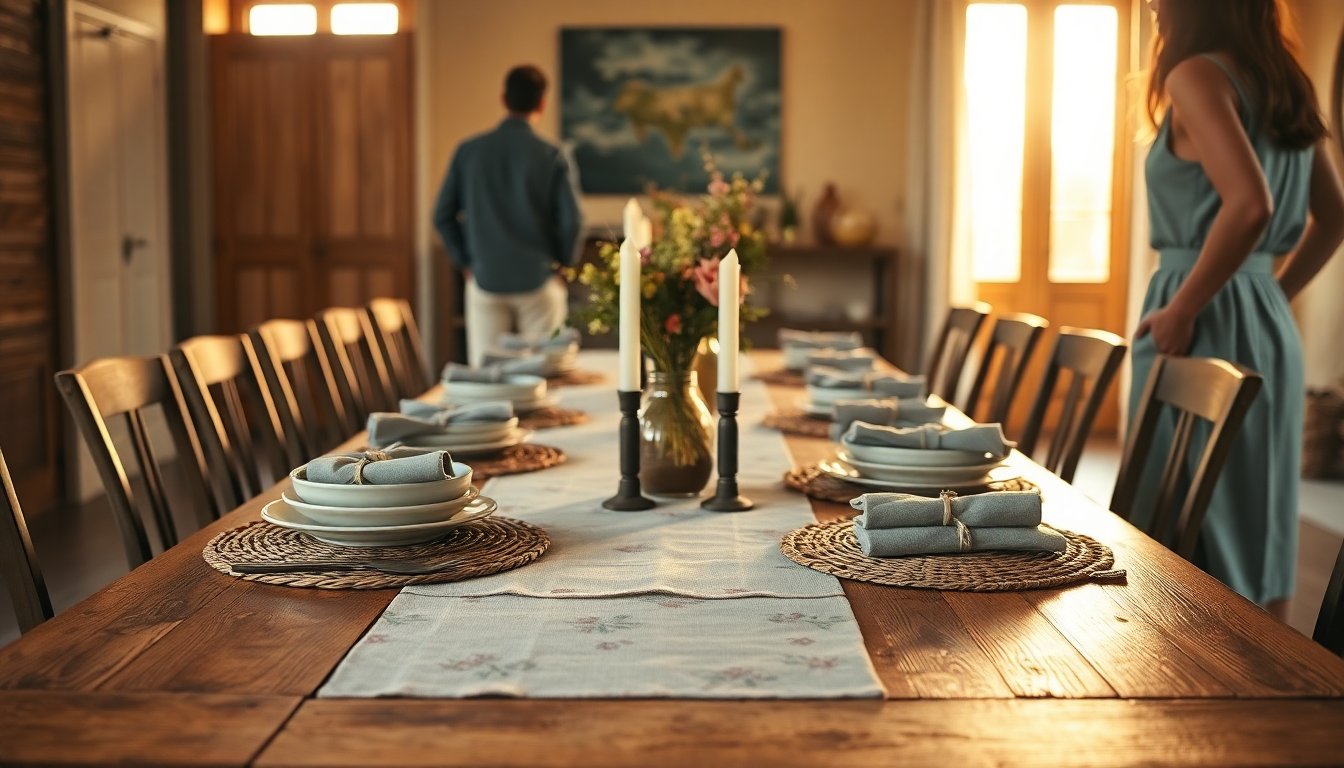
The way you dress a table determines the mood of a meal before a single dish arrives. Start with a deliberate foundation: a carefully chosen tablecloth or runner can anchor your setting and reduce the work needed for the rest of the decor. Shea McGee favors a signature print each season, and pieces like the Arboretum floral tablecloth act as the visual starting point. Treat this foundation the same way you would a room—if the base is calm and considered, adding accents becomes intuitive and cohesive. In other words, strong textiles make the rest of the process easier.
Behind every relaxed table is a small collection of reliable linens and pieces. McGee describes building a pantry of linens—a selection of soft, neutral fabrics that can be mixed and matched so you never start from scratch when hosting. These versatile items create a collected look by allowing contrast to stand out: patterned platters, textured flatware, and a bold goblet all become more effective against a calm textile backdrop. Keep a handful of favorite runners, tablecloths, and napkins in complementary tones to streamline future setups.
Start with a grounded foundation
Your table itself matters almost as much as what sits on it. A beautifully finished tabletop such as the Phipps Dining Table requires only modest styling to feel complete, while a dedicated outdoor piece should be built to endure. Natural linens and a simple runner instantly ground a display—think soft, breathable fabrics that age gracefully. A neutral base gives you room to experiment with color and pattern in smaller elements, helping the whole arrangement read as intentional rather than overcrowded. Prioritizing a strong foundation also makes cleanup and turnover feel less stressful after a gathering.
Layer for height and visual rhythm
One of the most common mistakes in tablescaping is keeping everything at the same level, which flattens the composition. Introduce variation by stacking objects and using vertical elements. Elevate a serving piece with a cake stand or stack wooden boards as makeshift risers. Candles are an easy way to add height without obstructing conversation—McGee often layers taper candlesticks with glass tealights like the Neeva Glass & Silver Tealight Lamp to create depth and ambiance. This kind of height variation provides rhythm and helps the eye travel across the table rather than resting in one flat plane.
Centerpieces and candlelight
Rather than a single, towering centerpiece, try a series of low, repeating elements to allow for easy interaction across the table. A row of small bud vases with delicate stems or a cluster of candles keeps sightlines open while feeling purposeful. When composing blooms, pair softer flowers with a few sprigs of foraged greenery—an approach that reads lived-in and approachable. Even small touches, like a sprig of rosemary on a plate, contribute scent and texture and signal thoughtfulness without pretension.
Choose serveware and accents that complement, not compete
Statement serveware can elevate a casual menu and reinforce the overall mood. Patterned pieces such as the Honor Serving Platter or a sturdy set like the Catarina Serving Set frame the food in an attractive way. For glassware, stout goblets—like the Keely Goblets—help balance larger serving pieces and bring scale into play. McGee recommends mixing finishes across flatware and serving utensils so settings feel curated rather than matchy: a matte fork next to a polished spoon and a woven utensil holder for outdoor meals creates a layered textural story.
Practical furniture and outdoor considerations
If you entertain outdoors, select furniture that marries form with function. A weather-tolerant piece such as the Linwood Teak Dining Table is useful for its durability and practical features like a self-storing extension leaf, which makes hosting flexible. For transporting items to and from the kitchen, a Rattan Utensil Caddy simplifies service while retaining a relaxed vibe. Durable materials that still look elegant will allow you to host frequently without worrying about wear and tear, and they help make outdoor meals feel intentionally comfortable.
Finally, the charm of a table often lives in the small, handmade details—a painted butter dish or a linen napkin softened with time adds personality. A piece like the Mary Hand-Painted Butter Dish introduces character and underscores the idea that the table should be used, not simply admired. Aim for balance and restraint: when elements support the meal rather than steal attention, the whole evening feels more connected and welcoming. In Shea McGee’s approach, the tablescape is the stage; the food and company remain the stars.


