
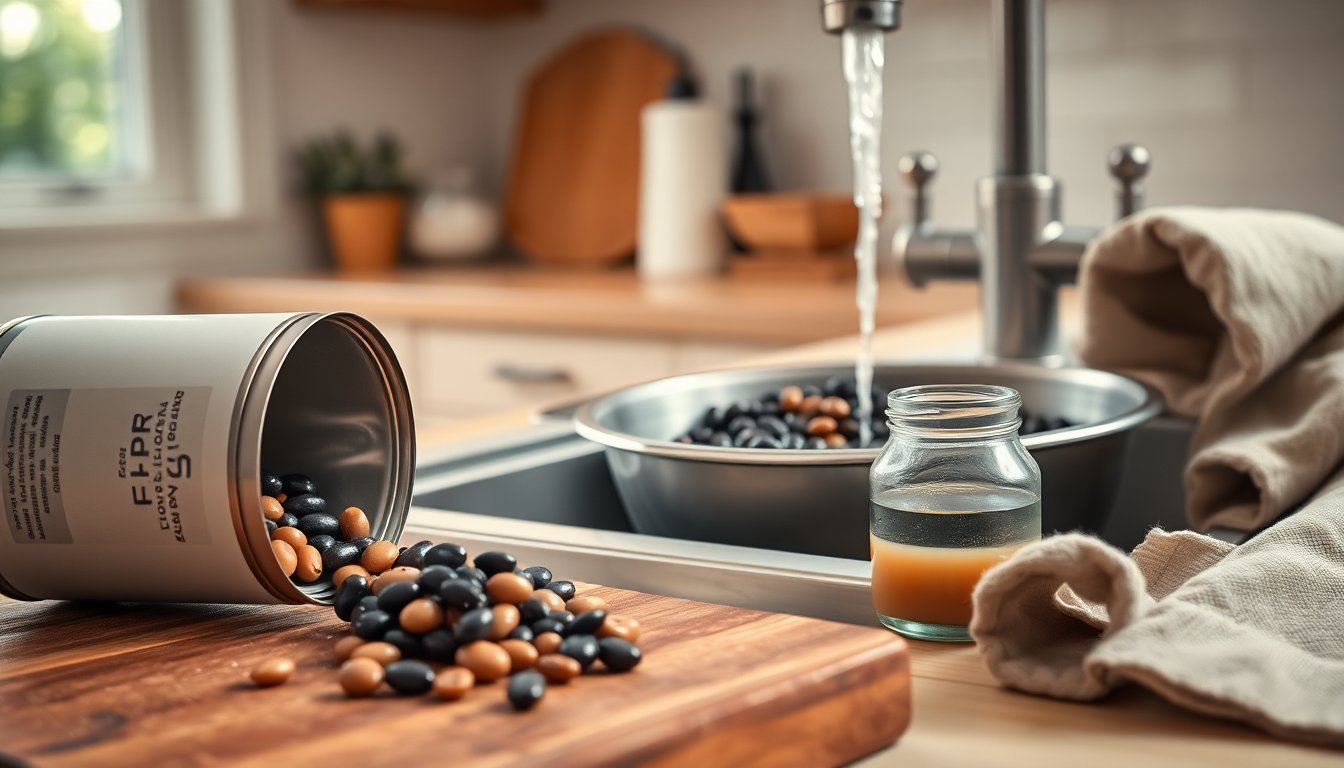
The pantry staple of many kitchens, canned beans are fast, convenient and nutritious, but they often carry a packing liquid that affects taste and texture. A short rinsing and draining step can change the way beans perform in salads, soups and side dishes. In this article we examine the practical reasons to rinse, the simple techniques that work best and creative ways to use the leftover liquid. If you aim for better flavor, lower sodium and a cleaner texture, adopting a routine to treat canned beans properly is an easy win.
Before we dig into methods, it helps to understand what you’re removing. The packing liquid contains dissolved sodium, residual starch and sometimes preservatives; it also has soluble proteins that create a viscous texture. For home cooks who want predictable results, the act of draining reduces excess salt, while rinsing removes starch and any canning residues. The next sections outline why these changes matter and how to implement them without wasting the nutritional and culinary potential of both beans and their liquid.
Why rinsing and draining matters
First, consider health and flavor. Many canned beans are packed with extra sodium to preserve shelf life and maintain firmness. Rinsing under cold water removes a large portion of that salt, which can be important for people monitoring their sodium intake. Second, rinsing gets rid of a thin coating of starch that can make beans gummy in salads or when combined with acidic dressings. Finally, draining improves texture: beans that have been rinsed separate more easily and integrate better with other ingredients, so the overall dish feels lighter and more balanced.
Practical techniques for rinsing and draining
Start by emptying the can into a fine-mesh strainer or colander, then shake gently to remove most of the liquid. Hold the strainer under running cold water and rinse for 10 to 20 seconds, tossing the beans with your hand or a spoon to ensure even cleaning. This method reduces sodium and surface starch without damaging the beans. If a recipe benefits from extra starch or liquid—such as thickening a stew—you can reserve the packing liquid instead of discarding it. The key is choosing the approach that suits your recipe and dietary needs.
Quick tips for busy cooks
Keep a small dish towel or bowl handy to catch splashes, and rinse beans in batches if you use several cans. For salads, a thorough rinse and chill the beans briefly to stop cooking and firm their texture. For soups where you want a clearer broth, rinse to curb cloudiness. Remember that some brands sell low-sodium or no-salt-added varieties; rinsing still helps remove residual starch and any metallic can taste, but the sodium reduction gain will be smaller. Simple habits save time and make results more consistent.
Ways to use the liquid and boost sustainability
The discarded liquid from canned beans is not always waste. That viscous, protein-rich water—commonly called aquafaba—can mimic egg whites in certain recipes and become a vegan foaming agent for mousses, meringues and mayonnaise. If you reserve it, store it in the refrigerator for a few days or freeze it in measured portions. Alternatively, add a splash to soups or bean purees to improve body without extra oil. Using the liquid intentionally reduces food waste and expands what you can do with a simple can of beans.
When to skip rinsing
Occasionally you may choose not to rinse: recipes where the packing liquid contributes flavor or body—such as a rustic chili or a creamy bean dip—can benefit from keeping it. Also, if you are using a labeled low-sodium product and the recipe requires extra starch or thickening power, retaining the liquid makes sense. Always taste and adjust salt at the end of cooking so you control seasoning rather than relying on the can’s contents.
In short, a few moments spent rinsing and draining canned beans deliver cleaner flavor, lower sodium, and better texture for many dishes, while saving the packing liquid can add culinary versatility. Whether you embrace aquafaba as a vegan ingredient or simply rinse beans for salads, this small kitchen habit offers outsized benefits for taste, health and sustainability.


