Bringing greenery into rooms that receive little sunshine used to seem impossible, but a growing selection of shade-tolerant species makes it feasible. Whether you live in a basement studio, a north-facing apartment, or simply want a touch of life on a dim hallway wall, there are plants that thrive with only indirect or artificial light. The following guide introduces the most reliable options, explains their basic needs, and shows how to combine them with simple lighting tricks to keep them healthy and, in some cases, flowering year-round.
Understanding that “low light” still means some illumination is essential. Low light refers to environments where the brightest daylight is filtered through curtains, reflected off walls, or replaced by fluorescent or LED fixtures. In such settings, plants rely on the limited photons they receive to conduct photosynthesis, so watering, humidity, and temperature become even more critical. With these principles in mind, the plants listed below have proven their resilience in real homes, making them safe bets for beginners and seasoned growers alike.
Shade-loving foliage plants that need minimal sunlight
Snake Plant (Sansevieria) boasts stiff, upright leaves striped in green and yellow. Its ability to store water in thick roots lets it survive weeks without a drink, and it tolerates near-dark corners. Aside from being virtually indestructible, it filters indoor pollutants, adding an air-purifying benefit.
ZZ Plant (Zamioculcas zamiifolia) features glossy, dark-green oval foliage that looks almost plastic. The plant’s rhizomes hold moisture, so watering only when the soil feels dry is sufficient. It can flourish under fluorescents, making it ideal for office spaces without windows.
Peace Lily (Spathiphyllum) combines deep green leaves with elegant white spathes. It prefers medium to low indirect light and signals thirst by drooping its leaves, giving a clear visual reminder to water. Regular misting boosts humidity, encouraging longer-lasting blooms.
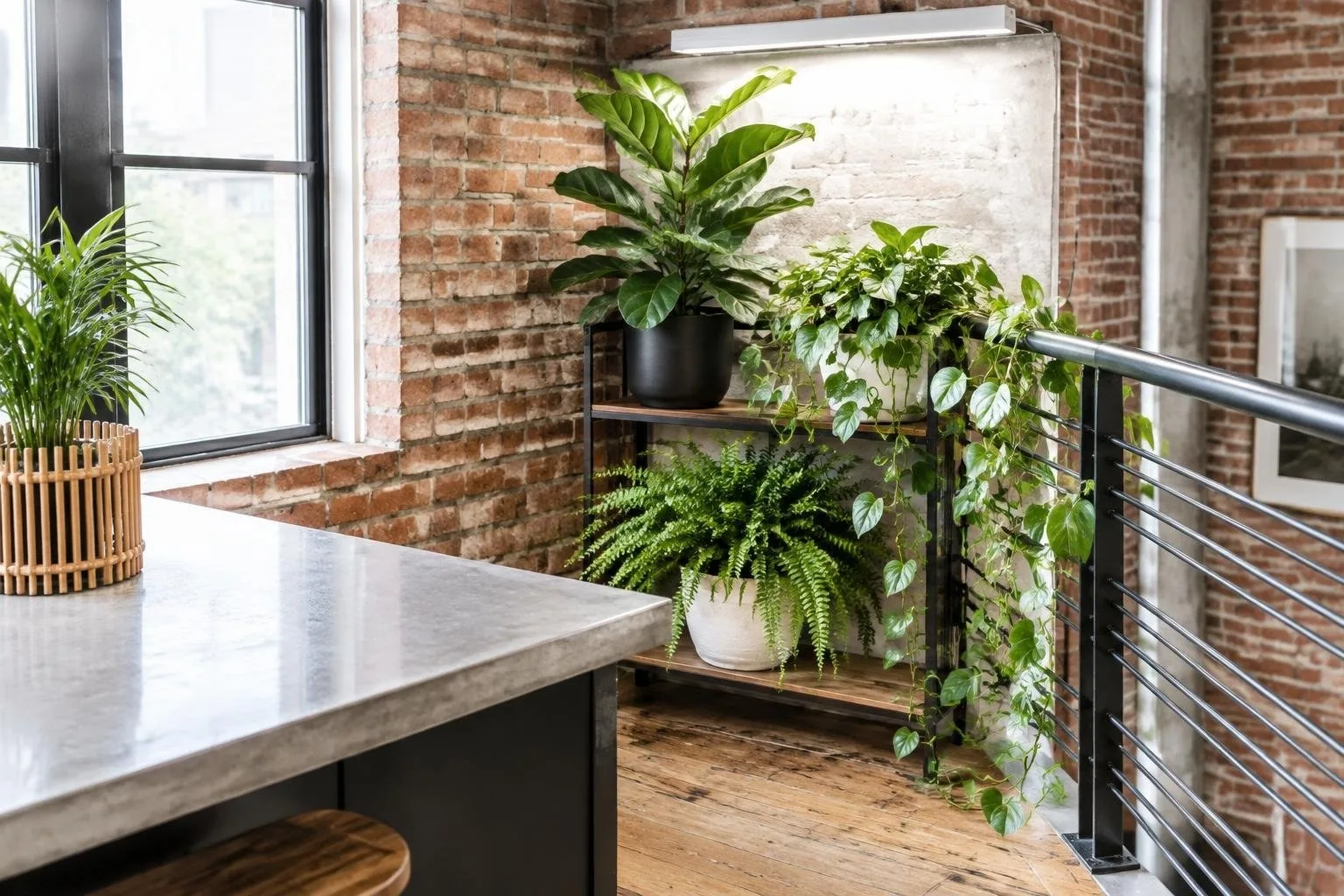
Pothos (Epipremnum aureum) is a trailing vine that quickly colonises shelves or hanging baskets. Varieties such as ‘Golden’ and ‘Marble Queen’ showcase variegated foliage, and the plant can stretch toward any available light source, forgiving occasional lapses in watering.
Spider Plant (Chlorophytum comosum) displays arching, striped leaves and produces off-shoot “babies” that dangle from the mother plant. It thrives in low to moderate indirect light and enjoys occasional fertilisation, making it a lively addition to high-traffic rooms.
Chinese Evergreen (Aglaonema) offers patterned leaves in silver, green, and sometimes pink or red. It tolerates low illumination and prefers warm, humid air, which is why it excels in bathrooms with small windows. Keeping soil evenly moist prevents leaf browning.
Philodendron varieties, especially heart-leaf types, adapt well to dim corners. Their broad, glossy leaves create a tropical ambience, though growth slows without bright light. Minimal watering and occasional dusting keep the foliage photosynthetically efficient.
Flowering houseplants that can bloom in dimmer settings
Cyclamen produces delicate, butterfly-shaped flowers in shades of pink, red, white, or purple. To extend its bloom period, place it near an east- or north-facing window where temperatures stay between 60 °F and 70 °F. A pebble tray with water raises humidity, and watering from below avoids crown rot.
African Violet (Saintpaulia) prefers slightly acidic soil (pH 6.0-6.8) and a balanced 20-20-20 fertilizer every few months. Direct winter light and indirect summer light keep its leaves vibrant; bottom-watering prevents leaf spotting, while a humidifier or pebble tray maintains the moisture it loves.
Bromeliad displays a colorful bract that can last for months after a single bloom. The plant absorbs water through its central “cup,” which should be refreshed weekly with room-temperature water. Bright, filtered light ensures vivid coloration, and the plant will eventually produce offsets, or “pups,” that can be repotted.
Peace Lily also fits this section, as its white spathes appear even in low light when kept moist and misted regularly. Removing faded flowers encourages continual budding.
Kalanchoe thrives in bright, but not harsh, sunlight; daytime temperatures of 50 °F-70 °F and cooler nights prolong flower longevity. Allow the soil to dry between waterings and feed monthly during active growth for a prolific display.
How to evaluate and improve indoor lighting for all plants
Assessing the true light level in a room can be misleading. Even a south-facing window may deliver less than expected if curtains, blinds, or external obstructions block the sun. A simple shadow test helps: place a small object where you intend to place a plant and observe its shadow at various times. No shadow indicates low light, a faint shadow signals medium light, and a crisp, dark outline denotes bright light.
For a more precise measurement, a handheld light meter or a smartphone app can record foot-candles at a specific moment. Compare the reading with recommended ranges for each species; most low-light plants thrive above 50 foot-candles, while true shade-tolerant varieties can manage as low as 20.
If natural illumination falls short, modern LED grow lights provide a discreet solution. Recent models emit a balanced spectrum without the harsh pink or blue glow of older units, and they can be mounted near shelves or hanging baskets. Running the lights for 10-12 hours a day mimics a sunny day and boosts both foliage health and flower production.
Balancing light, water, and humidity creates an environment where even the shyest houseplants can prosper. By selecting species suited to your space, employing simple lighting checks, and adjusting care routines seasonally, you can turn any dim corner into a thriving indoor garden.