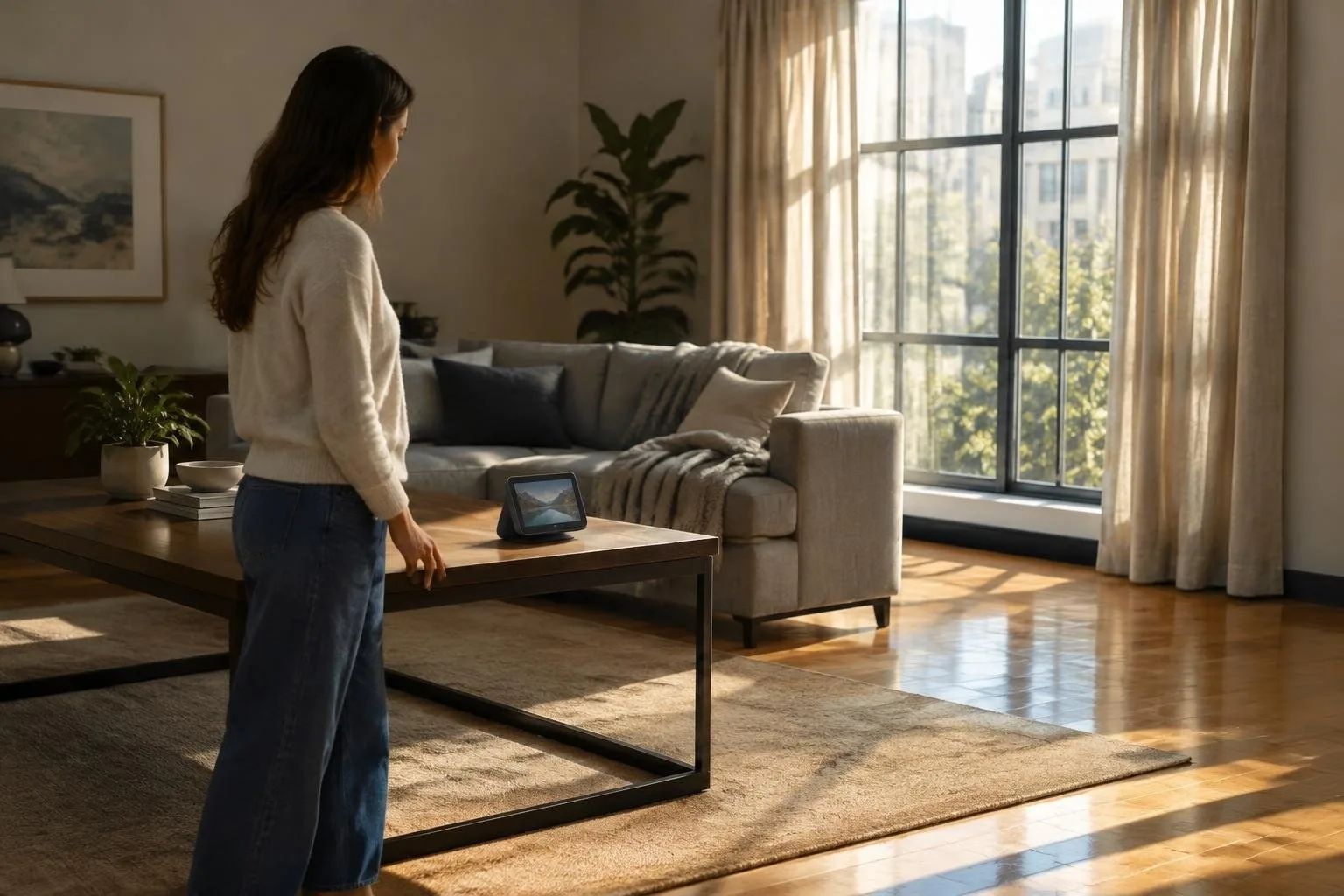
Apple introduced the HomeView as its first dedicated smart-home hub in the $299 price tier. The device combines a 7-inch Liquid Retina touchscreen with a domed aluminum speaker, positioning itself between a traditional smart speaker and a tablet. Two configurations are offered: a tabletop version that sits on a stand and a wall-mountable panel that drops the speaker module. Both models ship in four finishes (silver, starlight, rose pink and space gray) allowing owners to match existing décor. At 2.1 lb and 6.8 in tall, the unit is compact enough for a kitchen counter yet sturdy enough for a hallway mount.
Design, hardware and pricing options
The tabletop model arrives with a 30 W power adapter and a USB-C cable, while the wall-mounted variant requires a separate Schneider mounting kit starting at $59.95. The speaker base houses a four-mic array, delivering clear audio for voice-controlled interactions. A 12 MP Center Stage camera sits behind a slim bezel, capable of recognizing up to six household members. Internally, the A18 chip powers the interface, and a dedicated Secure Enclave isolates camera and microphone data, a design Apple says prevents the operating system from accessing raw sensor feeds.
Getting Siri up and running
Initial setup mirrors the experience of configuring an iPhone. Users must pair the HomeView with an iPhone running iOS 27.2 or later (or an iPad on iPadOS 27.2). The device emits a soft tonal cue while downloading the latest firmware, turning the update process into a subtle auditory cue rather than a static progress bar. After the software is installed, the HomeView prompts users to grant app permissions; this step is required even if the iPhone already holds those rights. Once linked, Siri becomes the primary interface, responding to natural-language queries and executing commands across the Apple ecosystem.
Personalised Siri AI and privacy safeguards
The revamped Siri AI on HomeView benefits from four microphones that capture speech from anywhere in the room. When a paired iPhone or iPad is nearby, Siri can pull calendar events, reminders or travel plans to answer context-aware questions such as “Do I have time for a concert tonight?” Face recognition ties each user’s profile to the device, showing personal messages, photos and music only after the associated iPhone is unlocked and connected to the same Wi-Fi 6E network. Apple stresses that the camera feed never leaves the Secure Enclave, and the system discards facial data once the user steps away, reinforcing on-device privacy.
Smart-home capabilities and current limits
HomeView functions as a central controller for accessories added through Apple HomeKit and the emerging Matter standard. Compatible lights, thermostats and smart plugs respond instantly to voice commands or automation routines. However, devices that lack native HomeKit support, such as many Ring cameras, do not appear in the Home app view, meaning users cannot monitor those feeds directly from the HomeView screen. The built-in camera can display up to nine live feeds simultaneously, but only for HomeKit-compatible cameras. Third-party streaming apps are not installable; instead, the hub mirrors apps like Apple TV, Music and Safari from a connected iPhone, akin to CarPlay’s projection model.
Regional rollout and price points
The HomeView went on sale on November 13, 2026, with first deliveries recorded in Australia and New Zealand. Apple lists the device in seven markets: the United States, Australia, Canada, India, New Zealand, Singapore and the United Kingdom. In the United States the sticker price is $299 for either model. Australian shoppers see a floor price of A$449, while New Zealand customers face NZ$599, figures that include local taxes but omit the optional mounting kit. Color options differ slightly between models; the wall-mounted version is limited to space gray and silver, whereas the tabletop version adds starlight and rose pink. Early adopters in Sydney, Auckland and other Pacific cities received the units within days of the launch, giving them a brief advantage over buyers in other regions.