Portable solar power is a renewable energy source that can be used to generate electricity for homes, especially in areas where traditional power sources are not available. It is a clean and sustainable way to produce energy, reducing reliance on fossil fuels and lowering carbon emissions.
The basic components of a portable solar power system include solar panels, a charge controller, a battery, and an inverter. The solar panels convert sunlight into electrical energy, which is then stored in the battery via the charge controller. The inverter converts the stored energy into usable electricity for homes.
Understanding Watts, Watt-Hours, and Panel Ratings
When selecting a portable solar power system, it is essential to understand the concepts of watts, watt-hours, and panel ratings. Watts measure the rate of energy production, while watt-hours measure the total energy produced over a period. Panel ratings indicate the maximum energy output of a solar panel under standard test conditions.
Comparing Panels and Power Stations
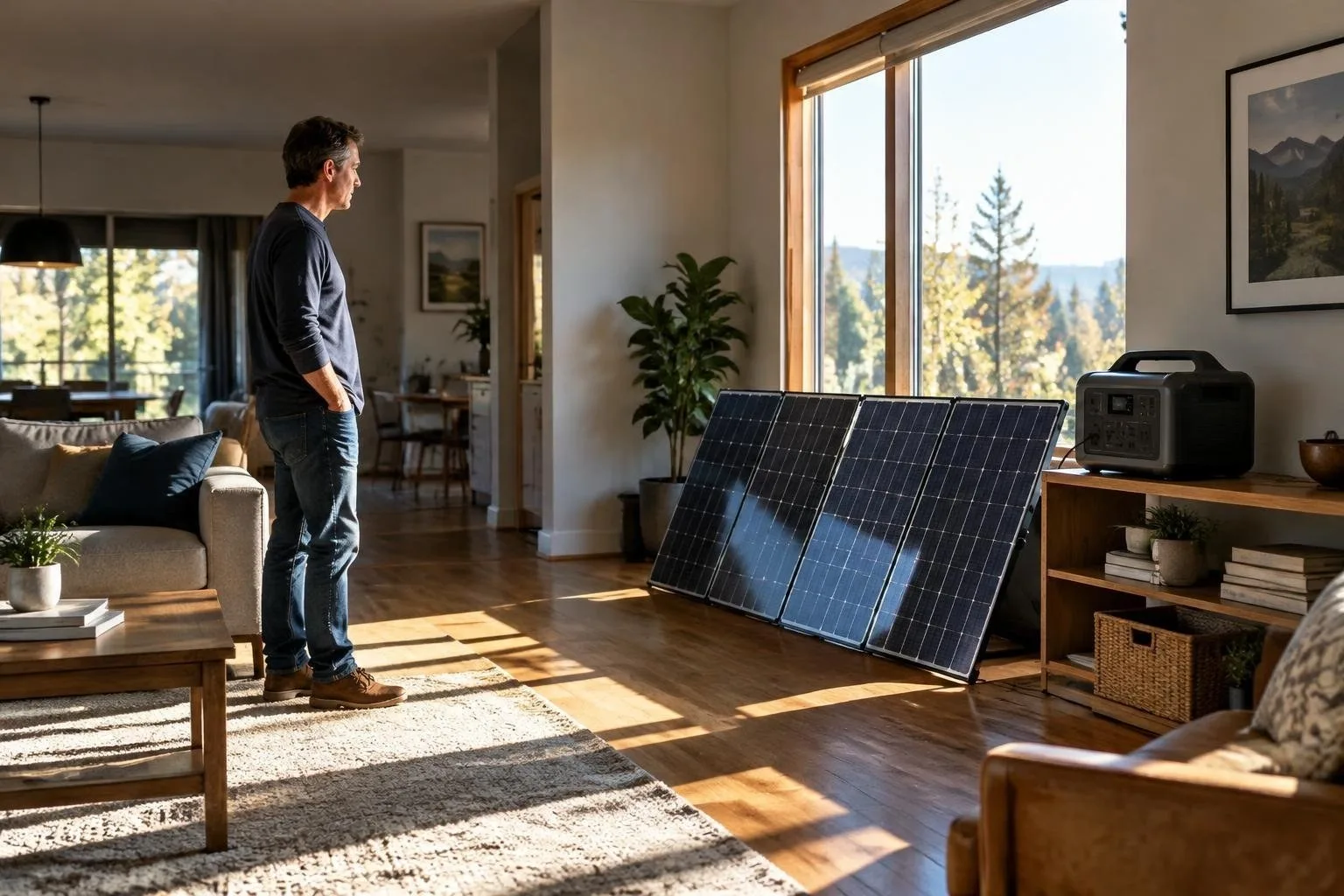
Portable solar panels and power stations are two popular options for harnessing solar energy. Solar panels are designed to charge batteries or power devices directly, while power stations are all-in-one systems that include a battery, inverter, and charge controller. When choosing between the two, consider the specific energy needs of your home and the available space for installation.
Setup Tips and Storage
To ensure efficient energy production, it is crucial to position solar panels at an optimal angle and direction to receive maximum sunlight. Regular maintenance is also necessary to keep the panels clean and free from debris. For storage, consider investing in a deep cycle battery that can store excess energy for later use.
Weather Care and Safety Precautions
Portable solar power systems require careful consideration of weather conditions to ensure safe and efficient operation. Avoid exposing the system to extreme temperatures, humidity, or physical stress. Always follow the manufacturer’s instructions for installation, maintenance, and troubleshooting to prevent accidents and injuries.
By understanding the basics of portable solar power and following the setup tips and safety precautions, homeowners can harness the power of the sun to generate clean and sustainable energy for their daily needs. With the right system in place, you can enjoy the benefits of renewable energy while reducing your reliance on traditional power sources.