
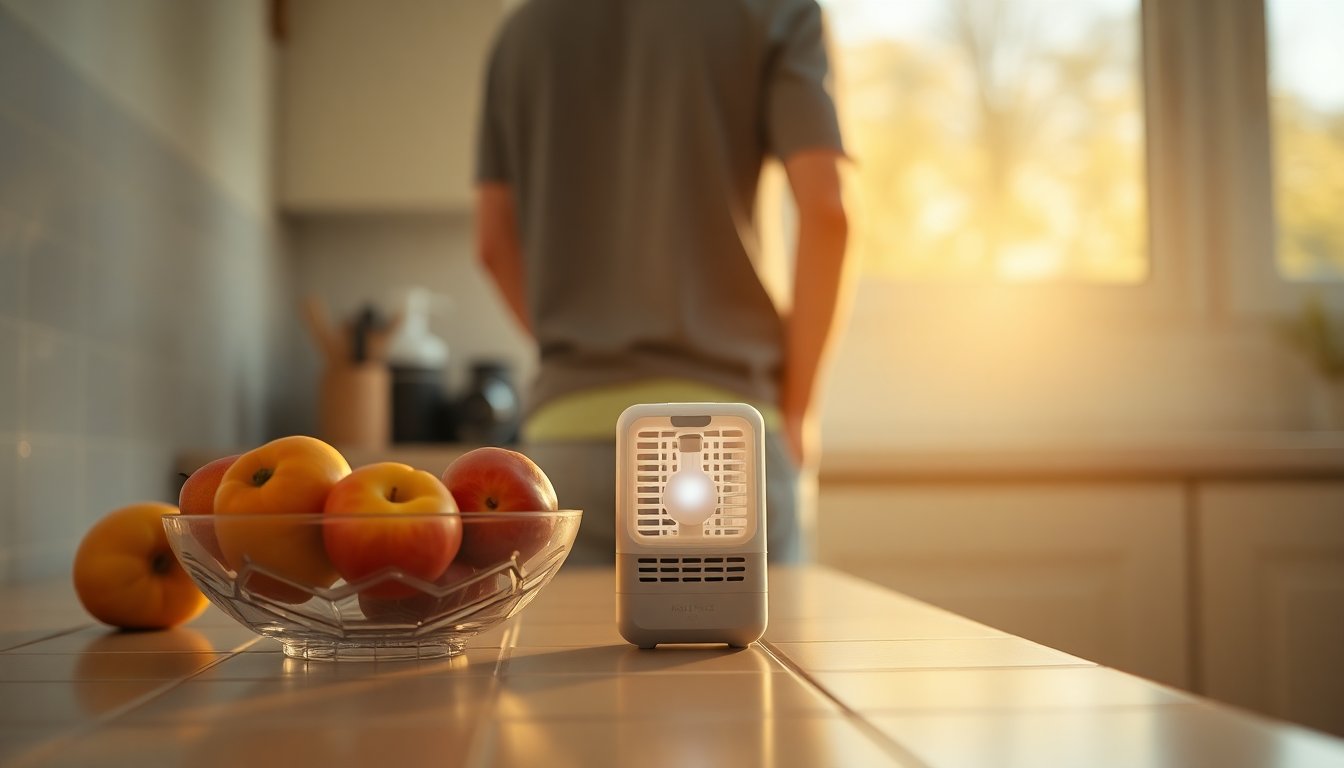
Warmer weather often brings unwelcome visitors into living spaces, and for many people the tiny invaders that cause the most irritation are fruit flies and fungus gnats. If you prefer not to tolerate insects in the home, a low-cost, plug-in option offers a hands-off approach that avoids loud zappers and messy bowls. This small device is designed to operate quietly in any room while using a targeted attraction method to capture pests where they congregate.
Rather than releasing pesticides or producing an audible electric shock, the unit relies on a visible UV blue light to lure insects toward a concealed adhesive area. The captured bugs stick to a replaceable cartridge so they stay out of sight. For people who care for indoor plants or keep fruit on the counter, this setup acts as a preventive barrier that intercepts insects before populations can build.
How the device works
The mechanism is straightforward: plug the trap into a wall socket and the UV blue light begins to attract small flying pests. The device takes advantage of UV attraction, a behavior some tiny insects naturally follow toward bright wavelengths, guiding them into the trap. Once close enough, the flies become adhered to the sticky cartridge, which remains hidden behind a curved housing so the collected insects are not on display.
Cartridge design and maintenance
Cartridges are engineered for convenience—one unit can typically remain effective for several months under normal conditions. When it’s time to replace it, an easy pull tab lets you remove the cartridge without touching the sticky surface, reducing the unpleasantness of disposal. Because the trap uses a physical adhesive rather than chemical sprays, the device is chemical-free and emits no odors while operating, making it suitable for kitchens, living areas, and spaces where people and pets spend time.
Placement and performance tips
Strategic placement is key to getting fast results. Position the trap near sources that consistently attract insects—such as a bowl of fruit, a trash can, or clustered plant pots—and allow the light to remain visible so pests can find it. For plant lovers dealing with fungus gnats, placing the unit between a humidifier and the most infested pots creates a capture zone where gnats often fly. The device is available in compact and larger sizes, so choose a model that matches the room scale where insects appear most often.
Room-by-room suggestions
In the kitchen, put the trap near a sink or a counter where fruit is stored; in a plant corner, set it just behind pots rather than directly on them. Although the trap is quiet and unobtrusive, its blue lamp cannot be dimmed, which some people may notice in a bedroom. Simple solutions—like sleeping with an eye mask or locating the unit a modest distance from your bed—help minimize any brightness without blocking the light entirely, which would reduce effectiveness.
Value, pros and trade-offs
At a fraction of the cost of professional pest control, this plug-in trap is an economical way to manage recurring small-fly problems. Retail versions are often available for under $20, and the cost of occasional cartridge replacements is typically lower than ongoing service fees. Benefits include silent operation, no airborne chemicals, and ease of use; the main trade-offs are the fixed blue light intensity and the need to periodically change cartridges when saturated.
Overall, the plug-in adhesive trap suits anyone looking for a discreet, low-maintenance solution to keep indoor pest issues from escalating. It performs particularly well for those who grow houseplants or store fresh produce indoors, offering the reassurance of effective capture without noisy hardware or strong-smelling treatments. With thoughtful placement and occasional cartridge swaps, households can see a significant reduction in fruit flies and gnats within days.


