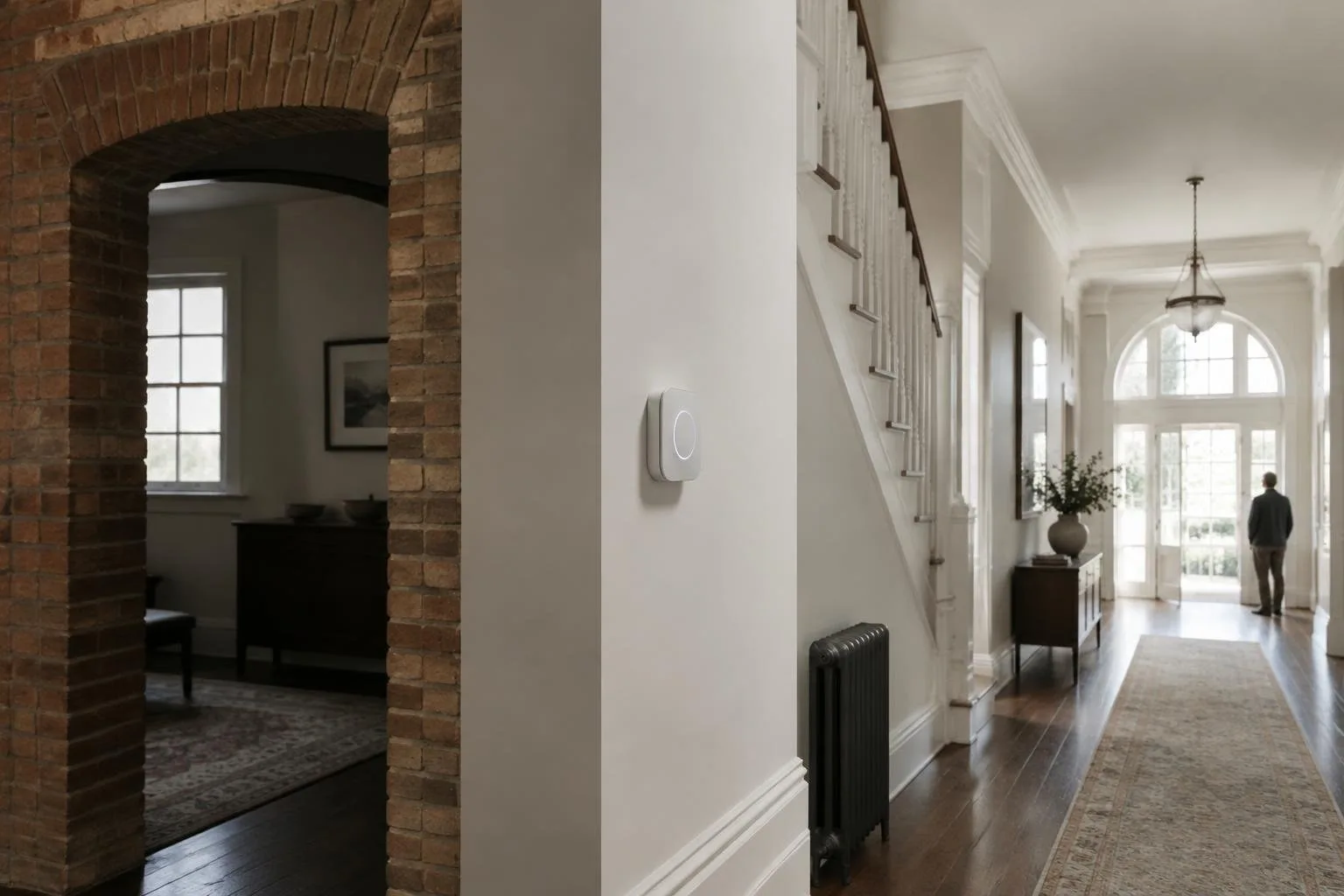
With energy prices wobbling and climate targets tightening, many households are tempted by the promise that a smart thermostat or an AI-driven heating controller can shave a noticeable chunk off the annual heating bill. The market is saturated with bold claims – 25% savings, £180 a year, or even “set-and-forget” comfort – but most of these statements are accompanied by fine print. To separate hype from measurable benefit, a homeowner embarked on a two-year experiment inside a 1930s solid-brick house that had received a modern loft conversion and insulation upgrades.
The two-year field trial: manual versus AI
During the winter of 2024 the heating set-up comprised a ten-year-old Worcester Bosch combi boiler, a basic Hive thermostat with the smart functions disabled, and thirteen standard thermostatic radiator valves (TRVs). The owner programmed a simple schedule – a couple of hours in the morning and evening – turned off the TRVs in unused rooms, and manually switched the system off whenever the family left the house. This “miserly” approach kept the comfort level uneven; evenings were often spent under blankets while the rest of the household complained of cold spots. Nevertheless, the recorded consumption for the November-to-May period amounted to 14 316.7 kWh of gas over 213 days, roughly 10-15 % lower than the previous, less-controlled winters.
Switching to a Tado X ecosystem in summer 2025
In mid-2025 the Hive unit was replaced with a full Tado X installation. The kit supplied thirteen smart radiator thermostats, two wireless room thermostats, and a boiler-mounted programmer. Unlike a single-zone thermostat, each smart TRV can request boiler activation and modulate the hot-water flow to its own radiator, effectively turning off heat to rooms that do not need it. The system also integrates with OpenTherm where supported – the test boiler, however, lacked that protocol. The Tado app allowed schedule mirroring across rooms, and a monthly subscription (£3.99) unlocked the AI layer that learns heating curves, performs automatic hydraulic balancing, detects open windows, and pre-heats the dwelling based on geofencing data.
Measured outcomes of the AI-enabled period
Once the AI functions were turned on, the heating pattern changed subtly: the boiler fired more frequently but for shorter bursts, and several radiators that previously ran wastefully – notably one serving an uninsulated porch – were automatically switched off after the first week’s Energy IQ report highlighted their excess consumption. Over the subsequent winter (2025-26) the total gas usage fell to about 13 800 kWh, translating to a modest but tangible 3-4 % reduction compared with the manually-controlled baseline. The “real-time” cost breakdown offered by Energy IQ also revealed that individual rooms varied by up to 15 % in their share of the bill, giving the family a clear view of where further adjustments could be made.
Comparing the major smart-thermostat families
Beyond the Tado X platform, several other manufacturers provide room-by-room control, hydraulic balancing, and Matter/Thread compatibility. The Bosch Smart Home Thermostat II +M is slightly larger and louder than Tado’s unit but integrates seamlessly with the broader Bosch ecosystem; it does not require a subscription, and its Matter-enabled model works directly with Alexa, Google or Apple Home. The Homematic IP Evo – the current test winner in independent reviews – offers automatic hydraulic balancing, optional cloud-free operation via a local CCU, and a price of about €78, making it attractive for privacy-concerned users. tink Basics provides a no-display, two-button design that relies on an existing Matter bridge, and is the most budget-friendly option at roughly €140 for a six-pack.
For those seeking the cheapest entry point, the TP-Link Kasa KE100 kit (≈ €33) and the Sonoff TRV Gen2 (≈ €35) both use Zigbee, support precise PID control, and integrate well with Home Assistant. While they lack built-in hydraulic balancing, they can be paired with third-party sensors to approximate the feature. Prices quoted reflect typical online offers as of late 2026, and most devices require a separate hub or bridge unless the user already owns a Matter-compatible hub such as a HomePod mini or Echo Dot.
How much can you actually save?
Laboratory data indicates that lowering the set-point by 1 °C can cut heating demand by up to 7 %, because the temperature differential driving heat loss shrinks. In practice, most occupants find 19-20 °C comfortable, so a deliberate 1-2 °C reduction often goes unnoticed – a realistic 5-10 % saving that aligns with the results observed in the two-year test. The magnitude of the benefit depends heavily on the building’s insulation, the boiler’s efficiency, and the degree of user interaction. Homes with poor envelope performance may see larger percentages, while ultra-well-insulated dwellings gain only marginal improvements. The subscription-based AI layer mainly adds convenience and fine-tuning rather than dramatic cost cuts.
When choosing a system, the decision should balance initial outlay, ecosystem lock-in, privacy preferences, and the need for extra features such as window detection or geofencing. For users already invested in a brand’s smart-home hub, staying within that ecosystem (Bosch, Homematic, or Eve) generally reduces installation friction. First-time adopters who value a polished app experience and automatic balancing may gravitate toward Tado X, accepting the modest subscription fee. Budget-oriented households can achieve comparable room-level control with tink Basics or the TP-Link Kasa kit, especially if a Matter bridge is already present.