How to furnish a rented room fast on a budget
Budget-friendly furnishing of a rented room means choosing items and fixes that are portable, affordable and renter-safe. The goal is to make the room functional and comfortable now while preserving the option to move without loss. This article defines the task, explains why a strategic approach matters, and lays out a practical seven-day furnishing plan and a cost-per-use approach to avoid impulse purchases.
Furnishing a rented room matters because renters generally face limitations on alterations and often change residences. A deliberate set of multi-use pieces and smart secondhand sourcing saves money, reduces waste, and delivers immediate comfort. The advice below focuses on principles and repeatable tactics rather than style trends so it remains useful across situations.
The article covers must-have pieces, flexible secondhand strategies, quick renter-safe fixes, a day-by-day setup plan, and the cost-per-use mindset to prioritize purchases. Practical examples and DIY upgrades show how to increase value without permanent changes.
Essential must-have pieces and why they matter
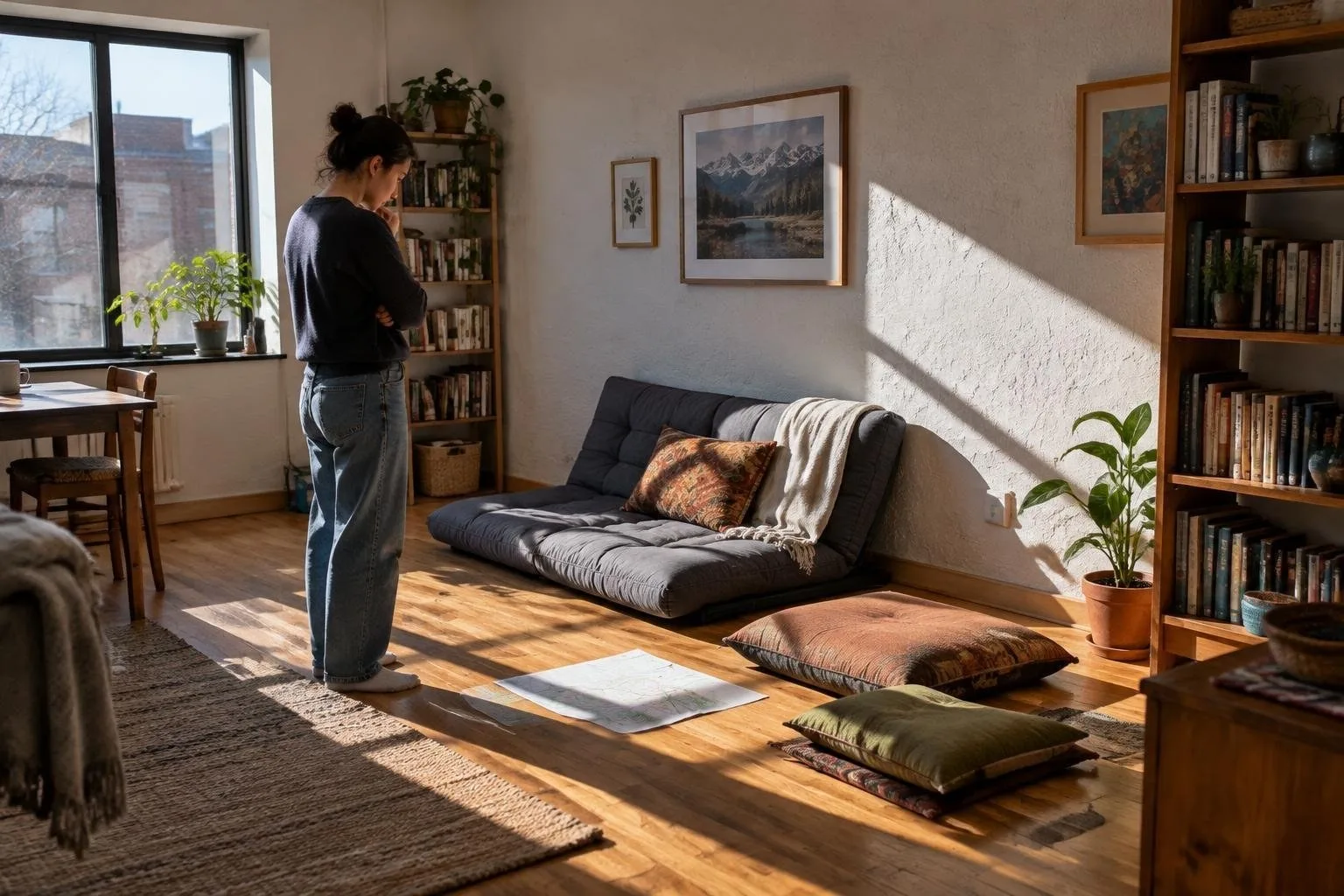
A short list of versatile items supplies most daily needs. Prioritize a good bed or mattress, a stable table or desk, and seating that doubles for guests. Choose pieces that are lightweight and easy to disassemble. Multi-use items such as a daybed that serves as sofa and bed, a folding table that functions as desk and dining surface, and stackable storage reduce the number of purchases required.
Storage solutions are critical in small rooms. Vertical shelves, under-bed boxes and hanging organizers free floor space. A set of matching baskets or bins creates cohesion and hides clutter. Keep one tool kit and a roll of removable hooks for renter-safe installation and maintenance.
Secondhand scoring and what to inspect
Secondhand markets yield the best value for solid wood furniture, sturdy tables and unique finds. Inspect joints, hardware and surfaces for wobble, rot or excessive wear. Pay attention to mattress hygiene: prefer sealed mattress toppers or buy a new mattress if health is a concern. When transporting, measure doorways and staircases in advance to avoid returns.
Negotiate with sellers by offering cash and a pickup time. Many items only need surface refurbishment to look fresh: sanding, a coat of paint and new knobs transform a piece at low cost. Keep receipts and photos for potential resale value.
Renter-safe fixes and easy DIY upgrades
Renter-safe changes maximize comfort without risking the deposit. Use removable adhesive hooks, tension rods, and command strips for hanging art and curtains. Adhesive-backed shelf liners protect surfaces. For lighting, plug-in wall sconces and LED floor lamps add warmth without rewiring. Label hardware and collect original plugs before using temporary fixtures.
DIY upgrades extend the life of secondhand items. Replace drawer sliders, add felt pads to chair legs, and swap out dated hardware. A washable slipcover refreshes a chair or sofa and is portable. Keep a small kit of paint, sandpaper and brushes to touch up scratches during move-out.
Seven-day furnishing plan
Breaking the move-in into daily objectives prevents overwhelm and ensures usable space fast. The seven-day plan prioritizes essentials first, then comfort and organization.
- Day 1: Measure and clean. Measure rooms, doors and windows; deep-clean surfaces and plan layout.
- Day 2: Bed and sleep setup. Bring in mattress, bedding and essentials for immediate rest.
- Day 3: Work and dining area. Set up a surface for work and eating with proper lighting.
- Day 4: Storage and organization. Install shelving, under-bed storage and closet organizers.
- Day 5: Seating and secondary furniture. Add a chair or small sofa and a side table.
- Day 6: Lighting and soft furnishings. Add rugs, curtains, lamps and textiles for comfort.
- Day 7: Final touches and routines. Hang art with removable hooks, set cleaning routines and create a simple maintenance checklist.
Cost-per-use mindset to avoid impulse buys
The cost-per-use method helps decide whether an item is worth buying. Divide the purchase price by expected uses. High-frequency, low-cost items win: a reliable mattress, a quality chair for daily work and multi-use storage often yield a low cost-per-use. Trendy decor with limited uses has a high cost-per-use and should be deprioritized unless it serves multiple roles.
Keep a simple spreadsheet or notebook to log purchase price, expected lifespan and estimated weekly uses. Reassess bigger purchases after 30 days in the space; many impulse buys reveal themselves in that window. When in doubt, rent, borrow or use a temporary solution until the habit and need are clear.
Insights, exceptions and special cases
Small rooms with irregular layouts benefit more from custom storage solutions and modular furniture. If the lease forbids drilling, allocate budget to freestanding alternatives and high-quality adhesive systems. For people who move frequently, prioritize lightweight pieces and resale-friendly styles. Those with mobility needs should focus early spending on accessibility features and a reliable mattress for health.
Pets and children change priorities: stain-resistant fabrics, washable covers and rounded furniture edges reduce long-term maintenance. A modest upfront investment in durable items can lower ongoing replacement costs.
Finally, keep an inventory of what is taken to the next place and what is sold or donated. That record sharpens future buying decisions and reduces waste.
Start by sourcing the three most impactful items from the must-have list, apply the seven-day plan, and use a simple cost-per-use tally for every purchase; over time these habits reduce expense and make each room move faster and cheaper to set up.