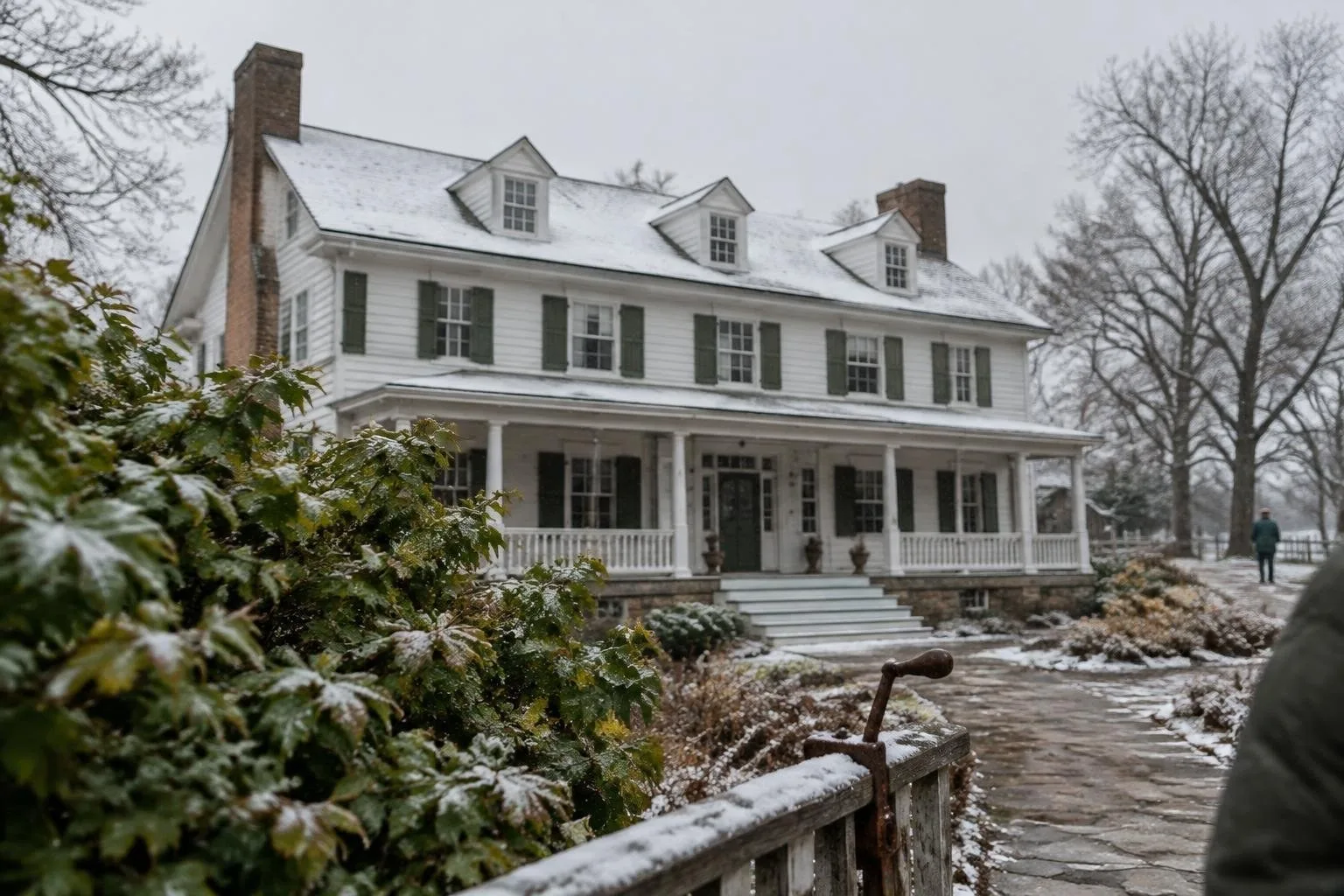
At the edge of south Minneapolis, Lyndale Farmstead Park encloses a landmark that is as much a part of the city’s heritage as its green spaces. The Theodore Wirth Home, a 7,300-square-foot Colonial Revival residence built in 1908, sits behind a circular driveway that constantly greets sledders, cyclists and picnickers. Historic preservation is visible from every window: the teal trim, the original front door and the layered roofs speak of a past when the house was used to lure Theodore Wirth, the park system’s most celebrated superintendent, to his first job.
Today, the house is occupied by Al Bangoura, the 12th superintendent of the Minneapolis Park and Recreation Board, who lives there with his family while overseeing a $4 million overhaul. At the same time, the surrounding park transforms each winter into a free, family-friendly playground featuring groomed ski loops, a popular sledding hill and a chalet-style café. The juxtaposition of a major restoration project and a bustling winter hub illustrates how a single site can serve both heritage and contemporary recreation.
Restoring a 116-Year-Old Superintendent’s Residence
The renovation effort began after years of incremental wear: cracked masonry, drafty single-pane windows and a roof that had survived more than a century of Minnesota weather. Because the house is listed on the National Register of Historic Places, every alteration must clear the Minnesota State Historic Preservation Office and the Minneapolis Heritage Preservation Commission. This dual-approval process added months of paperwork, but it also guarantees that the project respects the building’s original architectural character.
Funding and preservation challenges
Public funding for the project is limited, so the bulk of the budget comes from private donors, many of whom are descendants of former park leaders such as Theodore Wirth and Robert Ruhe. Their contributions reflect a belief that the house belongs to the people of Minneapolis, not to any single family. Private philanthropy thus bridges the gap between the modest park-board allocation and the $4 million target needed for structural repairs, roof replacement, new windows, and interior reconfiguration.
Planned upgrades
McMonigal Architects, the firm leading the effort, will first replace the aging roof and install energy-efficient windows that mimic the original profile. Inside, the layout will shift from a single bathroom serving six bedrooms to a more functional arrangement with three full baths and a half bath, a primary suite, and an enlarged kitchen suitable for modern family life. The historic drafting room in the walkout basement is slated to become a community space, but only after a bathroom is added to meet code requirements. These upgrades aim to preserve the house’s historic shell while delivering the comfort expected by today’s residents.
Theodore Wirth Park as a Free Winter Playground
While the house receives its facelift, the surrounding park already offers a curated winter experience. Snowmaking equipment ensures that the cross-country ski loops stay white even during mild spells, providing reliable terrain for beginners and seasoned skiers alike. The park’s 759-acre footprint includes a lake, urban forest, and a series of gentle hills, the most famous being a natural sledding slope that locals consider one of the best in the Twin Cities.
Snowmaking and ski trails
The Loppet Foundation partners with the park to maintain groomed ski loops that wind through pine stands and open meadows. Because entry to the park is free, families can plan an afternoon on the trails without worrying about lift tickets or parking fees. Trail maps are posted at The Trailhead, a chalet-style building that serves as the main hub for winter activities.
Sledding hill and community vibe
Children launch themselves down the sledding hill on tubes, while teenagers spread blankets on the grass for impromptu photo sessions. The hill’s proximity to the historic home creates a unique backdrop: visitors can watch a classic American house while enjoying modern winter fun. The park’s design, which blends wooded sections with open fields, encourages spontaneous exploration and keeps the experience fresh each time a visitor returns.
The Trailhead café
After a few loops on the skis or a thrilling sled ride, park-goers often congregate at The Trailhead for a hot drink or a quick bite. The café rotates its menu, offering breakfast burritos, sandwiches and warm beverages such as chai lattes and Americanos. This amenity embodies the Scandinavian concept of hygge, providing a cozy gathering spot that rounds out a day of outdoor activity.