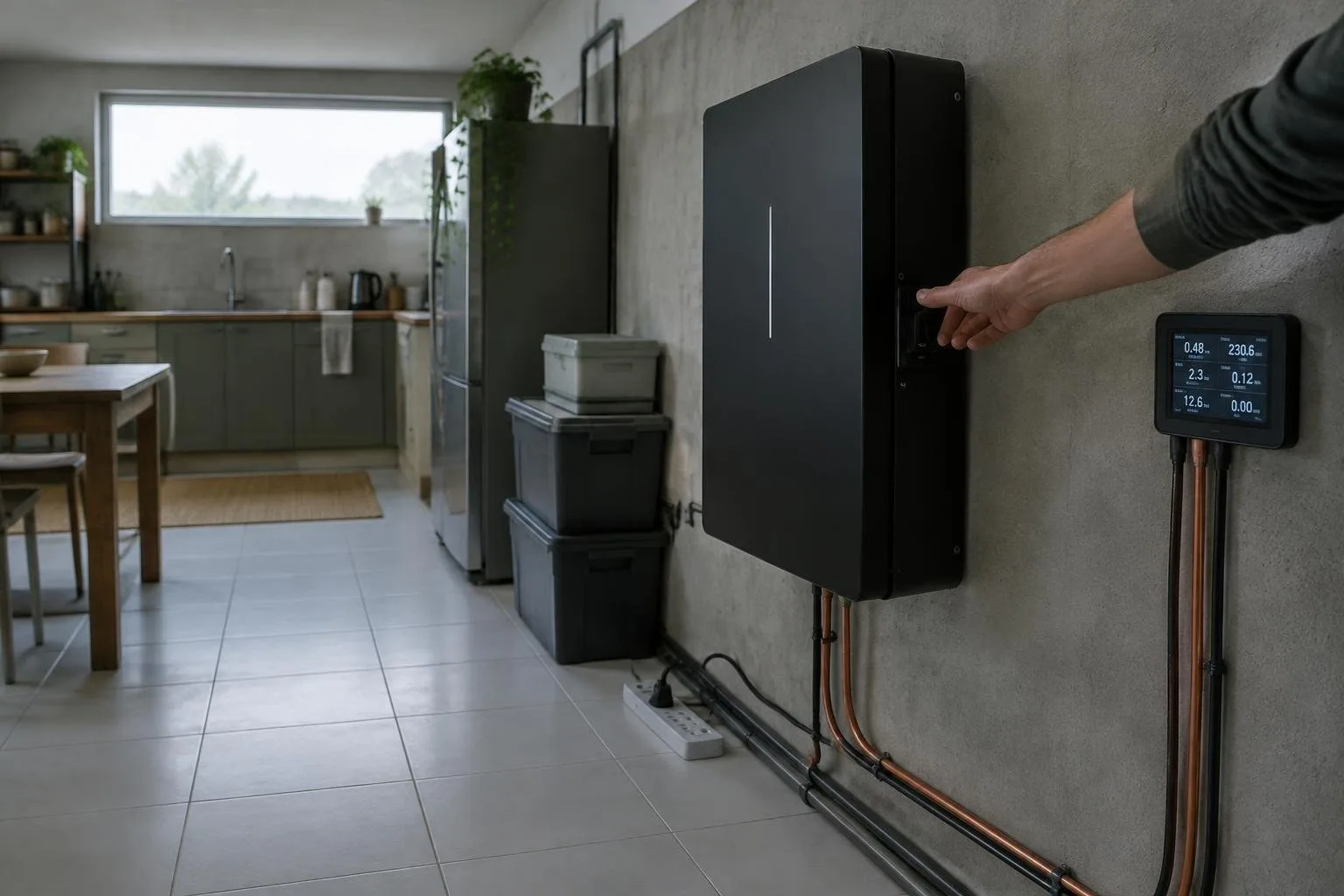
When British households consider adding a home battery, the focus often lands on capacity, inverter size and the promise of using stored solar or off-peak electricity. What receives far less attention is the amount of energy the system consumes while it is merely waiting: the standby power draw. In real-world installations this idle consumption can amount to several kilowatt-hours each day, subtly eroding the financial case for the investment.
Reddit users who have installed typical UK kits report that a 10 kW inverter paired with three BAT10 modules pulls roughly 100 to 125 watts when the “power-saving” mode is switched off. Over a 24-hour period that translates to about 2.4 kWh of electricity: equivalent to leaving a medium-size fridge running continuously. The figure represents 1-2.5 % of the battery’s rated capacity, a proportion that may look insignificant on paper but becomes material when the system is meant to offset high-rate electricity.
Idle consumption in common UK battery kits
One homeowner planning a system with 18 kWh of storage and a 10 kW inverter calculated that the inverter would draw 4 kWh per day in standby, based on a 2.5 % idle rate. The math is straightforward: 2.5 % of 18 kWh equals 0.45 kWh per hour, multiplied by 24 hours gives roughly 10.8 kWh, but the user’s own measurements showed a lower figure, around 4 kWh, due to the inverter’s specific efficiency curve. The discrepancy highlights that not all inverters behave identically, and manufacturers’ specifications can be optimistic.
A separate thread described a KH7 inverter whose electrical consumption rose after expanding an ECS4300 battery from four to six modules. The continuous draw settled at about 100 watts, again amounting to 2.4 kWh per day. The commentator explained that each added module carries its own battery management system, which remains active at all times. The overall idle loss therefore depends on the number of modules, the presence of a backup gateway, and whether the installation uses single-phase or three-phase equipment.
Financial impact of standby loss and peak-rate tariffs
A Reddit poster was quoted £6,800 (approximately $9,000) for a Powerwall 3 equipped with backup capability. The household’s annual electricity consumption includes roughly 3,500 kWh that fall into the peak-rate window, where prices jump from 6.6 pence per kWh overnight to 36 pence during the day. By charging the battery overnight and discharging during peak hours, the user could shave between £900 and £1,000 from the yearly bill, once conversion losses are accounted for.
Solar panels were also part of the discussion. The same homeowner faced a 60-year-old roof, an installation labour quote near £3,000, and an export tariff of 13 pence per kWh. One contributor argued that, for a house already using a battery to avoid peak rates, solar adds limited extra savings because the battery already shifts consumption to low-cost periods. Another shared a case where six solar panels replenished an 18 kWh battery during the day, generating a modest export income of £5.66 in a single day. The example demonstrates that the economic benefit of solar depends heavily on export rates, roof suitability and the proportion of daytime consumption that can be covered by solar generation.
Sizing decisions and cheaper alternatives
A different user evaluated whether a single 5 kWh unit could meet a daily daytime demand of 6.5 kWh, or if a pair of 5 kWh Fox batteries (total 10 kWh) would be justified. The homeowner intends to move laundry and a dehumidifier to daytime operation, shifting load from the overnight Octopus Go tariff. The analysis showed that a 5 kWh battery would still require grid imports during the day, whereas a 10 kWh pack could cover the new daytime load entirely, but at a significantly higher upfront cost.
For those who need only limited backup, the market now offers plug-and-play solutions such as Pila, which can be installed without a dedicated inverter and cost a fraction of a whole-home system. Tools from EnergySage, in partnership with electrification specialist Qmerit, allow homeowners to compare battery models, installation quotes and expected savings, making the trade-off between capacity, standby loss and price more transparent.