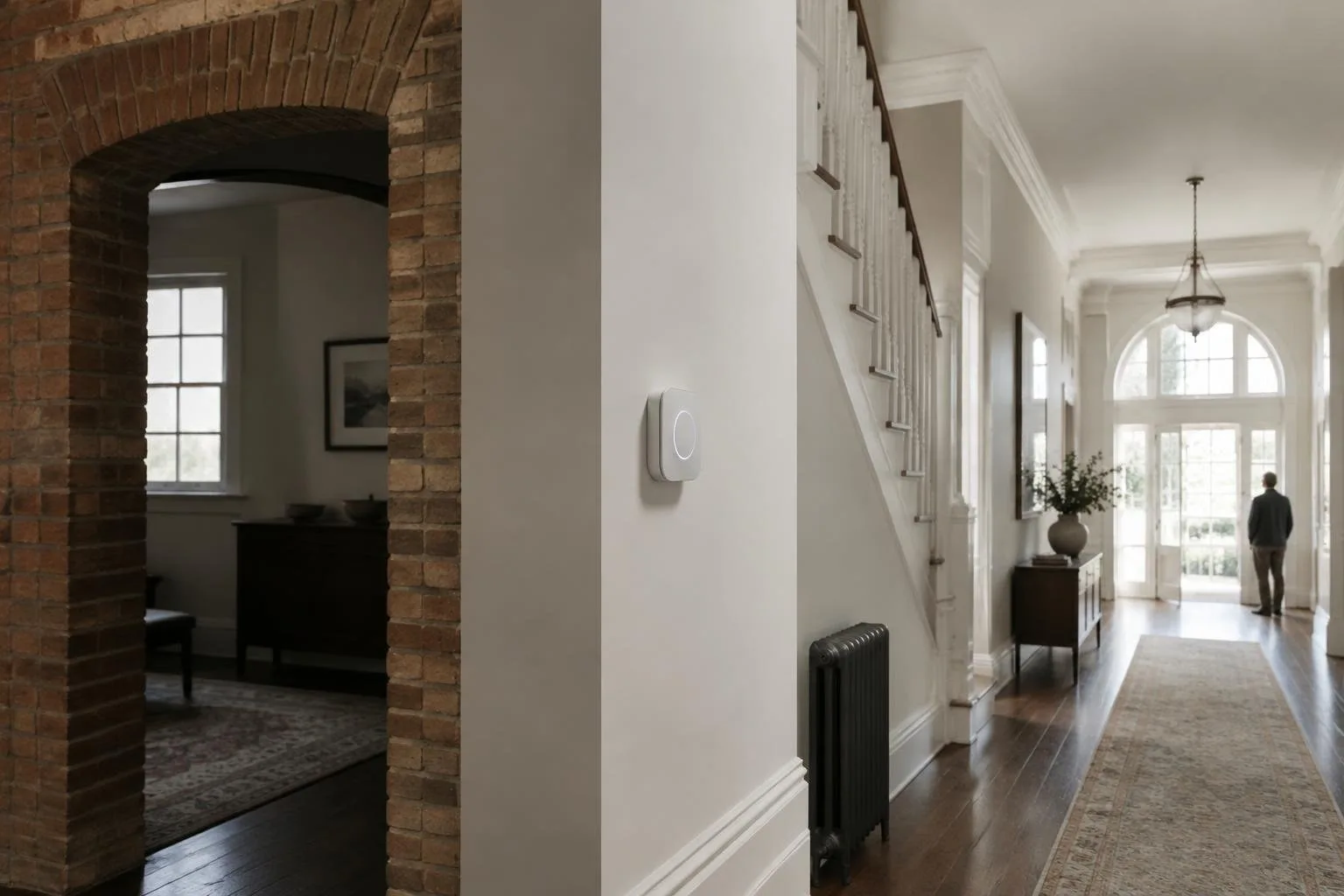
Heating, ventilation and air-conditioning (HVAC) systems have become far more efficient over the past decade, yet the way we command them often remains rudimentary. The device that sits on the wall – the thermostat – is the bridge between the indoor climate and the machinery that heats or cools the space. In many homes this bridge is still a basic traditional thermostat, while an increasing number of households are swapping it for a smart thermostat that learns habits, integrates with phones, and even talks to the boiler.
Understanding the practical differences between these two approaches helps homeowners decide whether the upgrade is a worthwhile investment. The following sections break down functionality, comfort impact, energy-saving potential, and the technical requirements of making the switch.
Traditional thermostats – simple but static control
A thermostat is essentially a temperature sensor wired to the HVAC system. When the measured air reaches a pre-set point, the thermostat triggers the heating or cooling unit to turn on; when the point is passed, it shuts the unit off. The most common variants are manual knobs, programmable units that let you set a daily schedule, and basic digital displays that add precision without learning capability.
Because the device follows a fixed rule set, owners must remember to adjust the setting when they leave the house, go on vacation, or simply desire a cooler night. Failure to do so means the furnace may run at full power while the home is empty, wasting energy and inflating bills.
Smart thermostats – adaptive, connected, and data-driven
Modern smart thermostat models connect to Wi-Fi and interact with smartphones, voice assistants, and a network of remote sensors. Their core features typically include:
- Remote control via mobile apps, allowing temperature changes from anywhere.
- Automatic scheduling that adjusts set-points based on occupancy patterns.
- Learning algorithms that recognise recurring behaviours, such as lowering the temperature at bedtime.
- Energy-usage dashboards that display kilowatt-hour consumption in real time.
- Weather integration that modifies heating demand according to outdoor conditions.
- Multi-room sensing using additional devices placed in bedrooms, hallways, or sun-exposed zones.
- Voice-assistant compatibility with platforms like Alexa, Google Assistant, or Siri.
- Maintenance alerts that flag unusually long heating cycles or spikes in power draw.
Instead of a single temperature reading from one spot, the system can balance comfort across the whole house, reducing hot spots in upstairs rooms and cold corners near exterior walls.
Comfort, energy savings and the real numbers
How temperature changes affect consumption
The public-energy agency IDAE reports that every degree Celsius raised in heating set-point adds roughly 7 % to energy consumption. Conversely, decreasing the temperature by two degrees can shave a comparable portion of the bill – the savings stem from the thermostat’s guidance, not from any magical algorithm.
Modulating versus on/off control
Traditional units operate in an on/off fashion, akin to flipping a light switch. Modern modulating thermostats – often paired with OpenTherm-compatible boilers – can ask the boiler to deliver “a little heat” instead of full power, improving seasonal efficiency by about 2 percentage points according to European Commission classifications. To benefit, both the thermostat and the boiler must support the same communication protocol.
Real-world savings expectations
When the home is well insulated and the HVAC plant is efficient, smart controls can reduce unnecessary operation during work-day hours by 8-13 %, matching the savings reported for programmable thermostats with valve-type radiators. However, the net impact diminishes in poorly sealed houses, where heat loss outweighs schedule optimisation. In multi-unit buildings with central heating, the financial benefit only materialises if individual consumption is billed separately, as mandated by Spain’s Real Decreto 736/2020. Otherwise, lowering your set-point does not affect the communal bill.
Installation, compatibility and maintenance benefits
Before buying a smart thermostat, verify that your existing system can speak the required language. Most modern boilers, heat pumps, and air-conditioners accept a 24 V C-wire; older installations may need an adapter or a professional electrician. Compatibility checks should cover:
- Type of heating source (gas boiler, heat pump, electric convectors).
- Presence of a common wire (C-wire) for continuous power.
- Support for OpenTherm or other modulation protocols.
- Reliability of the home’s Wi-Fi network.
Installation can be a DIY job for units that do not require a C-wire – for example, the latest fourth-generation Nest Learning Thermostat can be swapped without extra wiring, as highlighted by a recent Amazon discount that brings its price to $220. For more complex setups, hiring an HVAC technician avoids wiring mistakes and ensures the thermostat communicates correctly with the furnace.
Beyond comfort, smart thermostats act as a diagnostic layer. They can flag prolonged heating cycles, unexpected temperature swings, or higher-than-average power draw, prompting early service visits that prevent costly breakdowns. In practice, a homeowner who receives an alert about an over-working air-conditioner can arrange filter cleaning before the unit fails during a heat wave.