
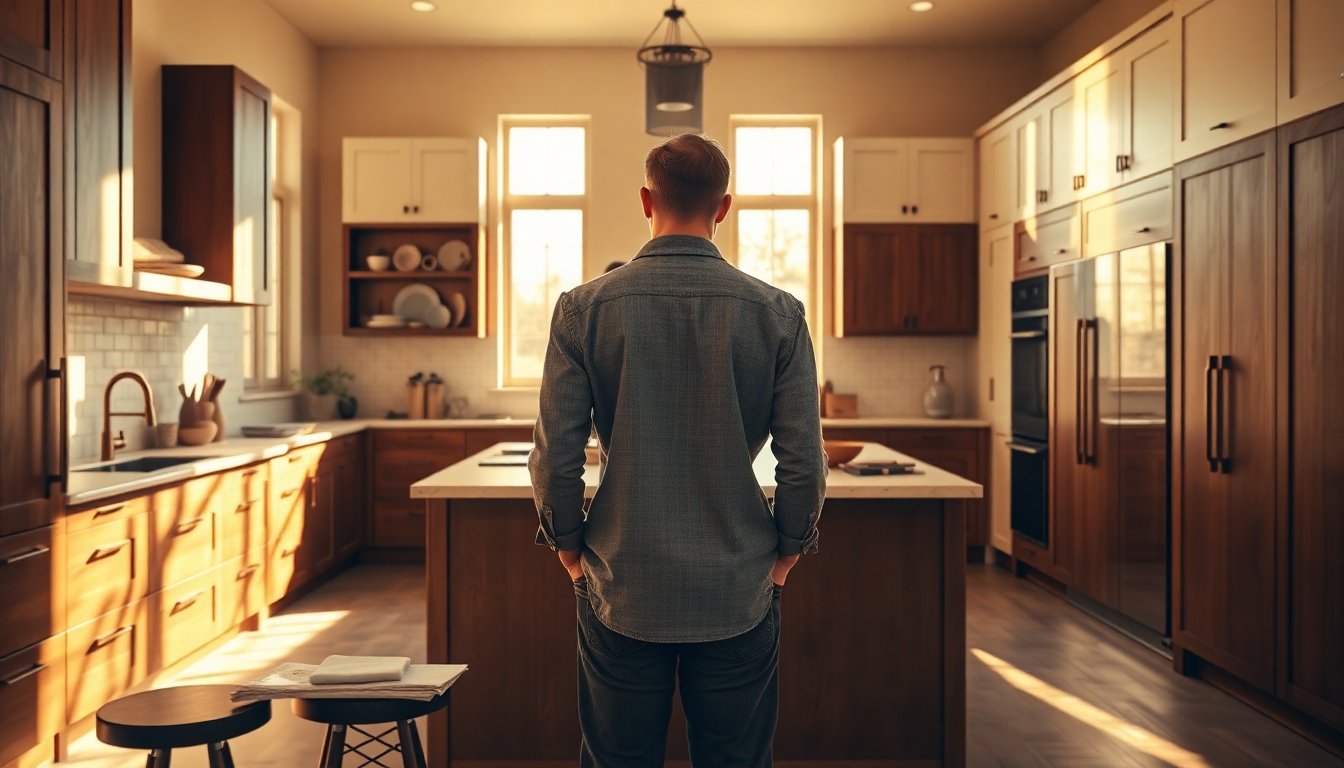
The look of kitchen cabinetry has shifted quickly: warm wood and two-tone schemes now lead many remodels, and designers are pairing texture, matte sheens, and mixed metals to create rooms that feel intentional and lived-in. In this article I summarize the industry data, local cost benchmarks, and practical choices that explain why the white-everything kitchen is giving way to warmer, more layered palettes. The numbers from professional surveys and homeowner studies confirm the change, and the examples below show how to prioritize impact without overspending.
At the center of the shift is an appreciation for materiality and contrast: a subtle perimeter in a warm-wood finish anchored by a statement island in a saturated color or deep tone. Throughout this piece you will find plain language explanations of technical terms, cost ranges used by local installers, and clear guidance on door styles, finishes, hardware, and space-planning strategies that make these trends work in real kitchens.
Why warm wood and two-tone kitchens are gaining ground
Two authoritative sources show the same movement: the Houzz 2026 Kitchen Trends Study reports 29% of renovating homeowners chose wood cabinets versus 28% choosing white, while NKBA professionals note that 59% are specifying more wood grain in projects. In practice this means white oak leads wood choices at roughly half of wood projects, and medium wood tones often replace painted white except in coastal or ultra-minimal niches. The practical upside is warmth, visible grain, and tactile texture — attributes many homeowners prefer over flat, glossy paint.
Data and local cost examples
Numbers translate to budgets. For a 30-linear-foot run, a stock painted-white kitchen typically installs for about $4,500–$9,000, while a real-wood-veneer warm oak option runs near $6,000–$12,000. Solid white oak custom cabinetry is commonly quoted at $15,000–$27,000, with walnut usually 15–20% higher. These local benchmarks show how you can mix tiers: spend more on visible statement elements and economize on less prominent runs to balance design and cost.
Design details shaping cabinet choices in 2026
Several material and style decisions dominate specifications this year. The slim shaker door (narrower rails) reads as cleaner and more architectural than traditional shaker, while inset cabinetry — where doors sit flush inside the face frame — returns as a premium furniture-like option. Frameless or European-style boxes remain popular for modern layouts. Additionally, textured fronts such as fluted or reeded panels and soft curves are reappearing, giving islands and pantries a bespoke, furniture-grade presence.
Finishes, color placement, and hardware trends
Finish choices have moved toward low-sheen surfaces: roughly 65% of painted cabinets in current specs are satin and about 25% are matte, while wood cabinets favor low-sheen conversion varnish or oil finishes. The island has become the preferred spot for bold color — about 57% of bold-color projects put the statement on the island — with deep navy, forest green, charcoal, and matte black leading. Hardware is increasingly mixed-metal: designers combine unlacquered or aged brass with satin nickel or matte-black accents to create layered, curated palettes.
Practical strategies for remodeling: storage, texture, and budget
Make the most of these trends by using two-tone choices strategically. One effective rule is to allocate roughly 40–50% of the cabinet budget to the statement component (island, premium pantry wall, or custom run) while keeping perimeter runs in a cost-efficient tier. For storage and a unified look, floor-to-ceiling cabinetry and integrated appliance panels increase usable storage by an estimated 40–60% without expanding footprint; Houzz data shows almost half of renovating homeowners add pantry cabinetry in current projects.
Detail costs and installation notes
Adding reeded or fluted door detail typically increases cost by about $50–$150 per door, with a fully fluted island generally adding $600–$1,800. Custom architectural curves and arched details are priced separately and can add $800–$2,500 depending on complexity. Inset construction commonly adds about 15–25% above full-overlay pricing at the same cabinet tier, and frameless European boxes often run 5–15% more than framed options from major brands.
In short, the 2026 cabinet story is not a single look but a set of coordinated decisions: choose warm wood for texture, use a bold island to anchor the scheme, pick satin or matte finishes to avoid glare, and layer hardware finishes to feel editorial rather than matchy. These approaches let homeowners achieve high-impact change without a full gut remodel.


