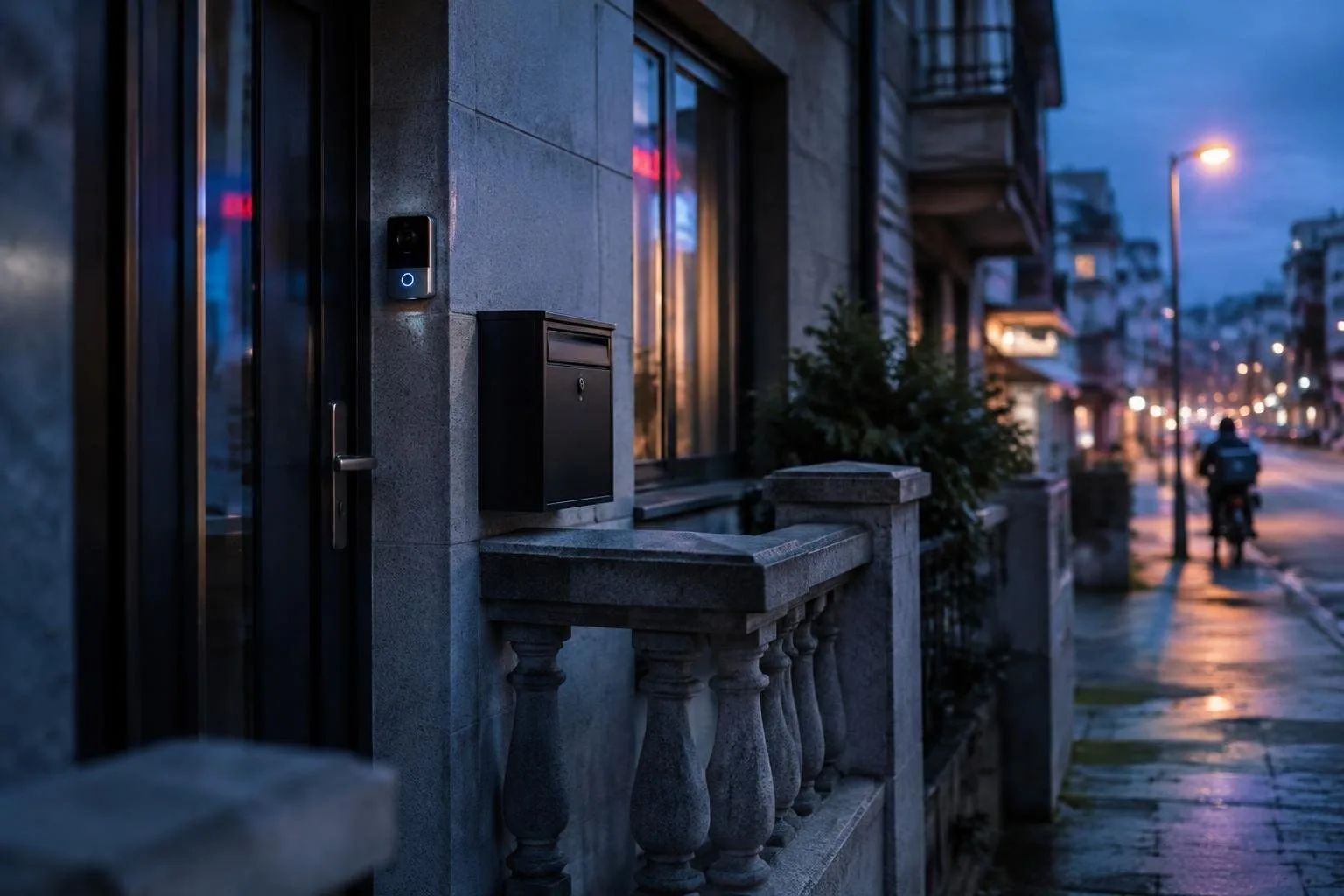
When a visitor presses the buzzer, the picture that flashes on your phone is the first line of defence for many households. Two brands dominate the market – Ring and Google Nest – and both promise crystal-clear footage, instant alerts and seamless integration with voice assistants. This guide breaks down the visual performance, real-time interaction, storage models and the latest security hardening measures so you can decide which device best matches your home-security strategy.
Image fidelity and low-light performance
The most obvious way to differentiate the two competitors is by their resolution and field-of-view specifications. Nest’s entry-level doorbell records at 960 × 1280 pixels (3:4 aspect ratio) with a 145° lens, sufficient to capture a visitor from head to toe without noticeable distortion. By contrast, Ring’s premium models push the envelope to 1536p (HD+) and employ a 155°-160° fisheye lens that sweeps a broader swath of the porch. The wider angle can be useful for spotting side-walkers, but the circular distortion in the corners may feel odd on a flat-screen display.
Lighting conditions expose another gap. Ring’s HDR (high-dynamic-range) engine excels under direct sunlight, preserving details that often wash out on Nest units. At night, Ring supplies a full-color night-vision mode, while Nest falls back to a monochrome infrared feed. For users who want colour detail after dark – for example, to read a license plate – Ring currently holds the advantage. That said, many homeowners find Nest’s black-and-white night view adequate, especially when paired with external floodlights.
Live view latency, two-way talk and ecosystem integration
Security hinges on how quickly you learn that someone is at the door. Both platforms push push notifications, yet field tests indicate Ring’s alerts arrive a fraction of a second faster, and its live stream stays smoother during motion. Nest sometimes shows a brief lag, which could cause a fleeting visitor to disappear before you react. For families that rely on instant visual confirmation, the extra milliseconds matter.
Two-way audio also varies. Ring’s Wired Doorbell Pro upgraded its speaker-mic pair to a clearer, near-real-time conversation, and treats each press like an incoming phone call, guaranteeing you won’t miss it. Nest supports two-way talk as well, but its dialogue can feel slightly delayed, and it lacks the “pre-recorded reply” feature that Ring offers for busy moments.
Integration with voice assistants follows brand lines. A Nest doorbell streams directly to a Nest Hub or compatible TV via Google Assistant, while Ring pushes video to an Amazon Echo Show. If your home already runs Google Home, Nest feels native; if you’re entrenched in Alexa, Ring fits more cleanly. The decision therefore often comes down to which smart-home ecosystem you’ve invested in.
Recording models, subscription tiers and two-factor protection
Beyond live alerts, the way each system stores footage determines long-term usefulness. Nest provides three free hours of event clips; continuous 24/7 recording is locked behind the Advanced plan at $20 / month, delivering up to ten days of searchable footage. Ring, on the other hand, does not ship with any free cloud storage. Its baseline “Solo” plan starts at $4.99 / month for a single doorbell, while the “Multi” tier, $9.99 / month, covers unlimited devices at one address. Ring’s event clips persist for up to 180 days, markedly longer than Nest’s 60-day limit.
Security-focused users should also examine account protection. Two-factor authentication (2FA) adds a secondary code—usually sent to a trusted smartphone—before anyone can log into the doorbell’s app. Google Nest introduced 2FA across its accounts, encrypting video storage and blocking credential-theft attacks. Ring similarly supports two-step verification, though it must be enabled manually during setup. Activating 2FA dramatically reduces the risk of an intruder hijacking live feeds or downloading historic recordings.
Recent firmware updates from Google addressed several stability annoyances that often plagued Nest cameras and doorbells. Users reported live-view failures on iOS, dropped connections on foldable Android devices, and false “offline” status during brief power interruptions. The latest patch migrated all first-generation Nest cameras into the unified Google Home app and refined facial-recognition and audio sync for wired doorbells. While these fixes target Nest, they illustrate the importance of keeping device software current, especially when you rely on 2FA and cloud storage.
Ring leads on raw pixel count, HDR handling and colour night vision, while Nest offers tighter integration with Google-centric homes, slightly simpler pricing for multi-device households, and robust two-factor safeguards bundled with the broader Google ecosystem. Weigh your priority—whether it’s picture sharpness, alert speed, subscription cost or privacy resilience—before deciding which smart doorbell becomes the watchdog at your front entrance.