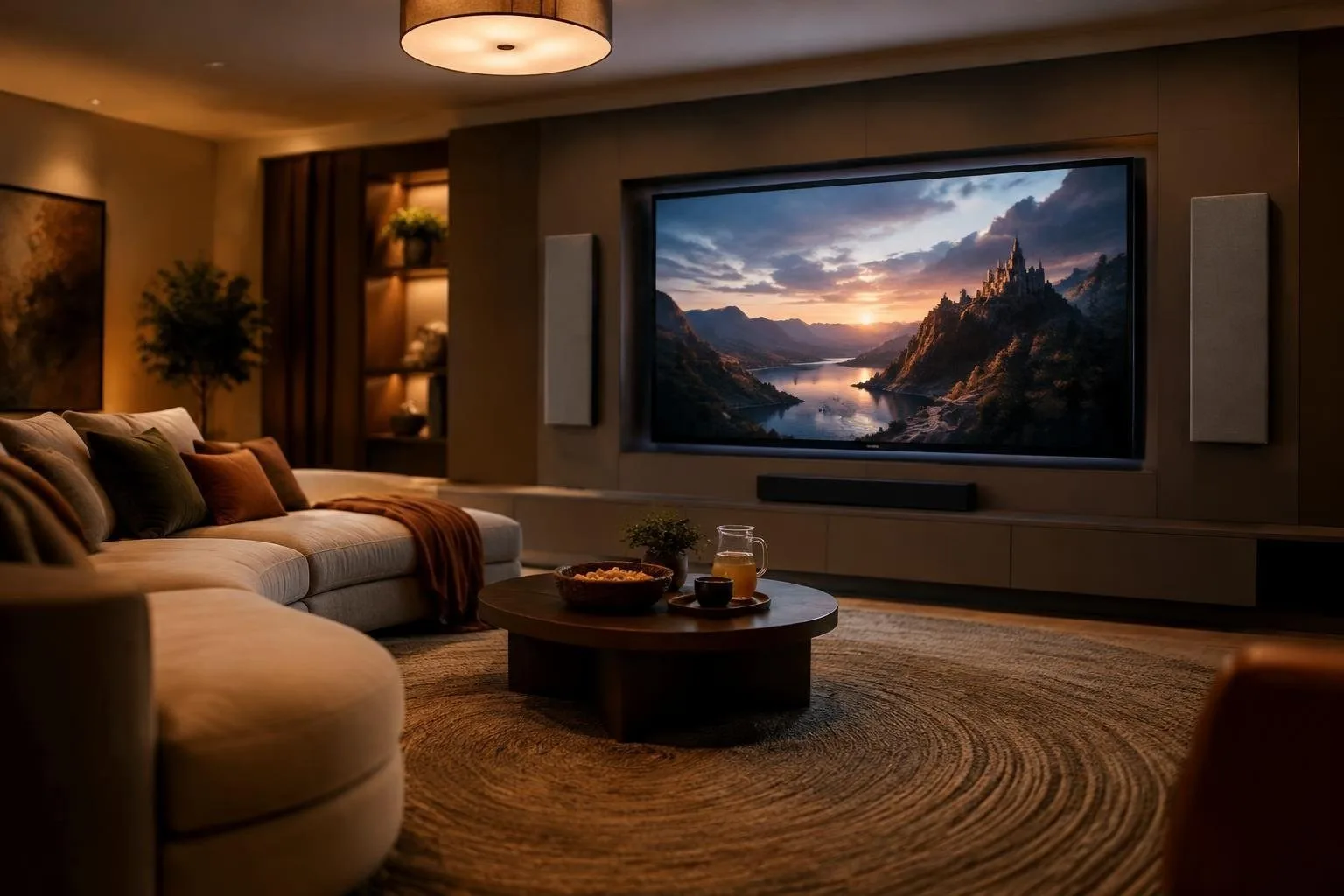
Modern ultra-thin televisions deliver stunning visuals, but their built-in speakers often leave dialogue buried under music and action scenes sounding thin. Before you rush out for the most expensive gear, take a moment to pinpoint the exact audio flaw that irritates you. Is it unclear speech, missing impact in explosions, or a desire for richer music reproduction? Understanding the problem sets the stage for choosing a solution that actually solves it.
Identify the audio problem you want to solve
When the center channel is weak, voices drift across the room and become hard to follow. A dedicated center speaker or a soundbar with a strong voice-enhancement mode can anchor dialogue to the screen. If the issue is a lack of rumble in action sequences, a subwoofer is usually the missing link. For listeners who also enjoy high-fidelity music, stereo separation and driver quality become more important than virtual surround processing. By matching the symptom to a hardware category, you avoid overspending on features you’ll never use.
Match the solution to your room and usage pattern
The size and shape of your viewing area dictate how much power and how many speakers you truly need. A small bedroom or apartment can feel overwhelmed by a full 7.1 system, while an open-plan living room may leave a single soundbar sounding thin, especially if the primary listening spot is several feet from the TV. Take note of where you sit, whether walls are shared with neighbors, and if you can place speakers behind or beside the couch. These practical constraints often decide between a compact bar, a bar-plus-sub package, or a full receiver-driven setup.
Connectivity is another hidden factor. Most 2020-era TVs support HDMI ARC or the newer eARC standard, which carries high-bandwidth audio back to a sound system over a single cable. eARC can handle lossless formats like Dolby TrueHD, while standard ARC works fine for Dolby Digital and most streaming services. Older sets may still rely on an optical output, but this limits format support and prevents the remote from controlling the soundbar directly.
Upgrade paths from simple to advanced
Compact soundbars for tight spaces
A slim soundbar sits just below the screen, needs minimal assembly, and delivers a noticeable lift in dialogue clarity. Many models ship with a dedicated voice-enhancement or “Clear Voice” mode that boosts mid-range frequencies where speech lives. While a compact bar cannot reproduce deep bass or a wide soundstage, it is ideal when visual clutter must stay low, budget is tight, and primary concern is clear speech during TV shows or news.
Soundbar plus wireless subwoofer
Adding a wireless subwoofer to a soundbar balances convenience with impact. The bar continues to handle dialogue and front-stage effects, while the sub delivers the low-frequency punch behind explosions, kick drums and film scores. “Wireless” merely means the audio signal is transmitted without speaker-level cables; the sub still needs a power outlet, but placement becomes flexible. Shifting the sub a few feet can tame excessive boom or fill a weak spot near the couch, making it a solid choice for mixed viewing habits that include sports, movies and casual music.
Surround-capable soundbars with rear speakers
Some premium packages include detachable rear speakers and support immersive formats like Dolby Atmos or DTS:X. Real rear drivers create a more authentic sense of space than virtual surround algorithms, especially when you sit near the center of the room. Upward-firing drivers in the main bar can simulate height effects, but they work best with flat ceilings around eight to ten feet high. Be aware of power requirements: certain rear modules draw from wall outlets, while others run on rechargeable batteries, influencing how clean the installation looks.
Powered bookshelf speakers for music lovers
If music fidelity rivals movie immersion, a pair of powered bookshelf speakers can outperform many soundbars at a comparable price. True left-right separation, richer midrange and a more natural soundstage make them ideal for concerts, acoustic tracks and gaming. Look for units with an HDMI ARC input for seamless TV integration, or use the optical input if HDMI isn’t available. Position the speakers at ear height, angled slightly toward the listening position, and keep them spaced apart from the TV to avoid visual interference.
Full AV-receiver and 5.1 speaker array
For dedicated home-theater rooms or enthusiasts who plan to expand over time, a classic AV receiver paired with a 5.1 speaker set remains the most adaptable solution. The layout includes left, center, right front speakers, two surround units and a subwoofer. The center channel is crucial for anchoring dialogue directly to the screen, preventing it from spreading across the room. With a receiver you can later add height speakers, upgrade drivers, or swap in higher-end components without replacing the entire system.
Real-world example: LG S6FTR 5.1 soundbar deal
The LG S6FTR bundle illustrates the middle-ground approach: a sleek soundbar containing the three front channels, two wireless rear speakers and a wireless subwoofer. It supports Dolby Digital, multiple music codecs and offers preset modes such as “Clear Voice Pro+” and “Bass Blast”. The companion app lets you adjust settings without leaving the couch, and a single remote can control both TV and soundbar thanks to HDMI ARC integration. Currently the package is offered at a 22 % discount, dropping the price from $400 to $310, making it a compelling entry point for those seeking a true 5.1 experience without the complexity of a full receiver.
How the top-ranked home-theater kits compare
Industry rankings for 2026 list options like the Samsung HW-Q990F, JBL Bar 1000MK2, Sonos Arc set and Sony BRAVIA Theatre Quad. Each bundle includes a main bar, subwoofer and rear speakers, but they differ in installation demands and price. Samsung and JBL provide permanent-mount rear speakers that need wall outlets, while JBL’s rears can operate on rechargeable batteries for occasional use. Sonos prioritizes modularity—Arc, Sub Gen 3 and One SL speakers can be mixed and matched, but the full configuration costs more than the LG package. Sony’s Quad system replaces the bar with two front speakers and adds a control unit for automatic room calibration.
When comparing these kits, focus on the total number of components, power needs, and whether the system relies on true wireless audio links (which still require AC power). Ensure your TV supports eARC if you plan to use lossless Atmos tracks, otherwise the experience may fall back to compressed Dolby Digital.
By first diagnosing the exact audio weakness, then weighing room size, connectivity and budget, you can select a solution that delivers clear dialogue, satisfying bass and immersive sound without unnecessary excess. Whether you opt for a compact bar, a bar-plus-sub, a surround-capable system, bookshelf speakers, or a full receiver, the right upgrade will make your TV’s picture finally match its sound.