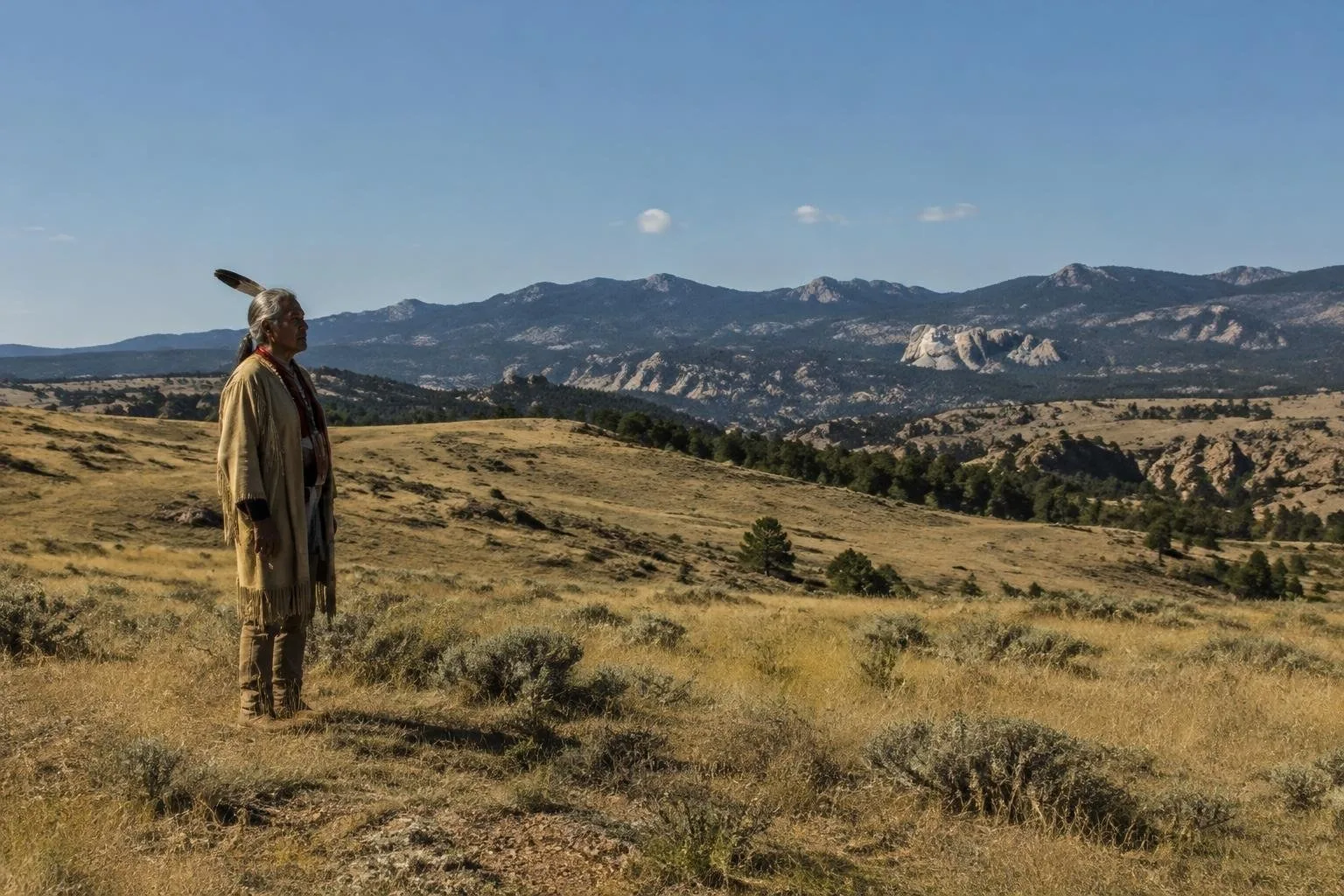
South Dakota is known as the Mount Rushmore State, home to some of the most recognizable landmarks in the American West. Its history, however, goes back thousands of years before statehood and is closely tied to the Indigenous peoples who have lived in the region for a long time. As the United States marks its 250th anniversary, the state’s history offers a different view of the nation’s past.
Mount Rushmore sits in the Black Hills, in the southwestern part of South Dakota. The monument is carved into granite and depicts George Washington, Thomas Jefferson, Theodore Roosevelt and Abraham Lincoln. The sculpture is in Pennington County, close to the town of Keystone.
Indigenous nations and the Black Hills
Long before South Dakota became a state, the Oceti Šakowiŋ, or Seven Council Fires, lived across the northern Great Plains. The Lakota and Dakota belong to this group, which shares language and kinship while keeping distinct histories. Along the Missouri River, the Arikara built earth-lodge villages where they grew corn, beans and squash, and they traded with bison-hunting nations. The Mandan also have historical ties to the region. For the Lakota, the Black Hills, known as Pahá Sápa, are a sacred landscape.
European traders arrived during the eighteenth century. The Louisiana Purchase of 1803 brought the territory under American control, and the Lewis and Clark expedition passed through the area the following year. The Dakota Territory was established in 1861.
Treaties, gold and the Sioux Nation
During Red Cloud’s War, from 1866 to 1868, Lakota forces joined the Northern Cheyenne and Northern Arapaho to challenge U.S. military efforts to secure the Bozeman Trail. The Fort Laramie Treaty of 1868 established the Great Sioux Reservation, including the Black Hills, and required the signatures of at least three-fourths of the adult male Sioux population before any reservation land could be ceded.
In 1874, an expedition led by Lt. Col. George Armstrong Custer reported gold in the Black Hills, and prospectors moved into the region despite the treaty. In 1876, federal commissioners presented an agreement requiring the Sioux Nation to surrender the Black Hills. About 10 percent of the adult male Sioux population signed, far short of the required three-fourths. Congress nonetheless enacted the agreement in 1877.
Chief Sitting Bull and Crazy Horse led Lakota resistance. Lakota and Northern Cheyenne forces defeated Custer’s command at the Battle of the Little Bighorn, but continued military pressure and the destruction of the bison herds weakened Indigenous resistance.
Assimilation, the Wounded Knee Massacre and later struggles
From 1879, Lakota children were removed from their families or surrendered under coercion and sent to institutions such as the Carlisle Indian Industrial School in Pennsylvania, where they were given English names and forbidden to speak their languages. In 1889, Congress divided the Great Sioux Reservation into smaller reservations, including Pine Ridge and Rosebud. South Dakota entered the Union on November 2 of that year.
Many Lakota turned to the Ghost Dance, a movement introduced by Wovoka in 1889. Federal authorities saw it as a threat. On December 29, 1890, soldiers of the Seventh Cavalry killed an estimated 150 to 300 Lakota near Wounded Knee Creek on the Pine Ridge Reservation. About half of those killed were women and children.
In 1980, the U.S. Supreme Court ruled in United States v. Sioux Nation of Indians that the federal government owed compensation for the taking of the Black Hills. The Sioux Nation has refused the money and continues to seek the return of the land.