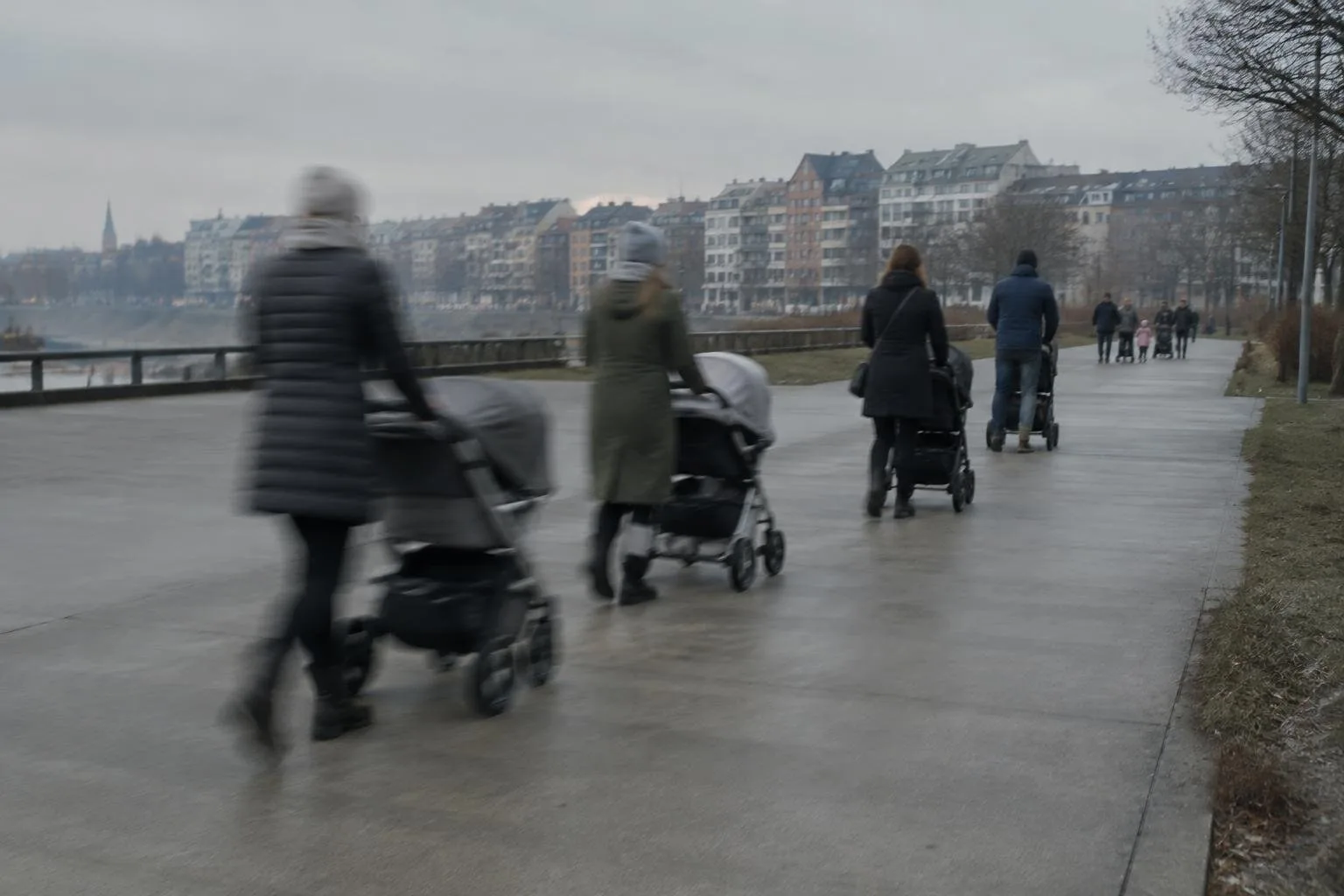
The conversation around parental support has surged in recent years, yet many families still lack a realistic way to remain home with a newborn. A little-known policy experiment from the early 2000s—At-Home Infant Care (AHIC)—offers a template that could bridge this gap. Piloted in Minnesota and Montana, the program paid eligible parents a time-limited stipend so they could forgo traditional childcare and care for their infants themselves. Although the pilots demonstrated strong demand and modest state savings, they faded when funding streams dried up.
Today, researchers from the Niskanen Center have refreshed the concept, proposing to tap the sizable pool of unspent Temporary Assistance for Needy Families (TANF) reserves. Their brief, “Bridging the Infant Care Gap: Reviving America’s At-Home Infant Care Programs,” outlines how the model can be updated for the 2020s, extending eligibility beyond the lowest-income bracket and making the financing mechanism resilient to budget cycles.
How the original AHIC pilots worked
In both Minnesota (2002-2005) and Montana (2003-2006), the state allocated a modest per-family grant—typically a few hundred dollars per month—for up to four months after birth. Participants were required to be employed or actively seeking work, and the funds were delivered through existing childcare-subsidy channels. The outcome data showed that 94 % of recipients were already working, and most chose to stay home rather than place their infant in a center. States reported savings because infant-to-adult ratios in licensed centers are unusually low, making infant slots expensive and often subsidized at rates above the AHIC payment.
Funding the revival with TANF reserves
The new proposal hinges on a technical classification called a non-recurring short-term benefit (NRST). By structuring the payment as an NRST, the disbursement is exempt from the federal work-participation calculations that typically constrain TANF spending. Because childbirth is a clearly defined, time-limited event, it satisfies the NRST criteria. Across the nation, states have accumulated roughly US$10 billion in unspent TANF block-grant money, providing a ready source of cash without additional federal appropriations.
Eligibility would be decoupled from the source of funds. Rather than using TANF income thresholds, states could adopt the same income-eligibility rules that govern their existing childcare-subsidy programs. These limits vary widely—some states cap at 30 % of median income, while others have no ceiling—meaning the revamped AHIC could serve families ranging from low-income to moderate earners. The Niskanen analysis suggests that a benefit set at 75 % of a state’s standard infant-care subsidy would outpace the maximum TANF grant, delivering roughly $900 per month in a state like Utah, while still costing the state less than a full childcare subsidy.
Interaction with paid family leave and broader policy landscape
Critics sometimes conflate AHIC with paid family leave, but the two serve distinct purposes. Paid leave provides income replacement during a broader window (often up to 12 weeks) but coverage is patchy: only about one-third of workers have access through state programs and another quarter through employers. Even in states with generous leave statutes, an estimated 25 % of working-age residents would remain ineligible. AHIC is designed to catch precisely those families, offering a supplemental payment that fills the eligibility holes left by leave programs.
Because the model does not replace existing leave or childcare subsidies, it can coexist with a range of reforms championed by both sides of the aisle—whether it’s expanding employer-based leave, introducing a national child-care tax credit, or adopting universal preschool. By shifting infants out of high-cost center settings, AHIC also eases pressure on providers, freeing capacity for older children who may need more intensive services.
Steps states must take to launch an AHIC program
Implementation is straightforward: legislatures would codify the program, set eligibility parameters, define the maximum monthly benefit (often as a percentage of the current infant-care subsidy), and determine the benefit duration—usually no more than four months to qualify as an NRST. Once enacted, the state’s TANF administrator would handle payments, linking them to the existing subsidy infrastructure to minimize administrative overhead. No new federal law is required; the only federal caveat is ensuring the NRST classification is applied correctly to avoid penalties.
In practice, a state could begin by analyzing its TANF reserve balance, modelling budget impacts using the Niskanen formulas, and conducting a brief stakeholder outreach with early-care providers, labor groups, and parent organizations. If the pilot succeeds, the program could be made permanent, offering a durable safety net for families who wish to stay home during the crucial first year of life.