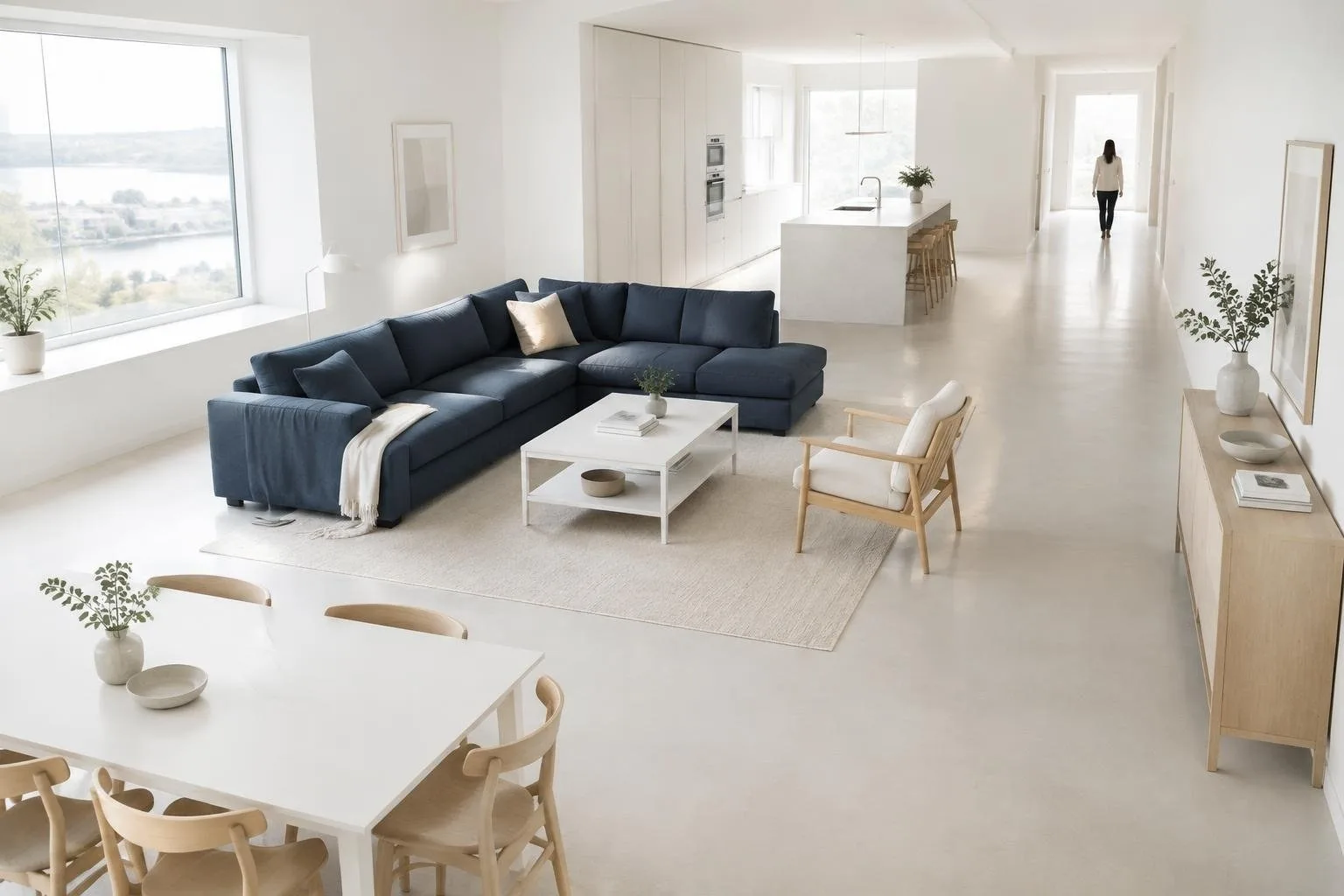
In a move that blends retail innovation with property technology, Ikea has begun a pilot partnership with Germany’s leading real-estate portal Immoscout24. The test uses artificial intelligence to overlay realistic Ikea products onto photographs of empty or partially furnished rooms that appear in online listings. The result is a set of immersive visualisations that show prospective renters or buyers how a living space could look when equipped with actual Ikea furniture.
The experiment focuses initially on two core areas of a home: the living room and the bedroom. By feeding room images into a custom AI model, the system generates a new version of each photo, populated with sofas, beds, shelving units and decorative accessories selected by Ikea’s interior-design specialists. Every item displayed is a genuine product from Ikea’s catalogue, not a generic 3-D placeholder.
AI-driven virtual staging for property listings
The technology behind the pilot analyses the geometry, lighting and colour palette of each source image. It then positions furniture in a way that respects spatial constraints and aesthetic balance. The process is fully automated, yet it incorporates a layer of human curation: virtual staging here means the AI proposes layouts that are subsequently vetted by Ikea designers to ensure brand consistency and functional realism. The final visualisations are integrated directly into Immoscout24’s listing pages, allowing users to toggle between the original empty view and the furnished version.
How the technology works and what it shows buyers
For a person scrolling through potential apartments, the AI-enhanced images act as a shortcut to imagination. Instead of mentally placing a couch or a wardrobe, the viewer instantly sees a completed scene. This can clarify whether a space feels cramped or spacious, how natural light interacts with furniture, and whether colour schemes match personal taste. The pilot also offers a glimpse of Ikea’s broader digital ecosystem, linking directly to product pages where users can learn more about the highlighted pieces or add them to a wish list.
Strategic implications for Ikea and the real-estate market
According to Parag Parekh, global chief digital officer for Ikea Retail, the collaboration represents a step toward a seamless omnichannel experience. By reaching consumers during the early stages of the home-search journey, Ikea positions itself as a source of inspiration before a shopper even steps into a store or visits the website’s furniture catalogue. Parekh notes that the one-year pilot will be evaluated for performance metrics such as user engagement, conversion rates to actual Ikea purchases, and overall satisfaction.
Beyond the immediate marketing benefits, the project builds on Ikea’s existing digital tools like Ikea Kreativ, which lets customers model furniture arrangements in a virtual replica of their own rooms. Integrating AI-generated staging into a public property platform expands the reach of those capabilities, exposing a broader audience to Ikea’s design language. If the pilot proves successful, the scope could widen to include kitchens, home offices and even outdoor spaces, further blurring the line between digital planning and physical shopping.
While the trial is limited to Germany for now, its outcome may influence similar initiatives in other markets where Ikea operates. The partnership also signals a growing interest among real-estate portals to enrich listings with interactive, data-driven visuals. As the industry leans toward more immersive online experiences, AI-powered staging could become a standard feature, offering both sellers and buyers a clearer understanding of a property’s potential.