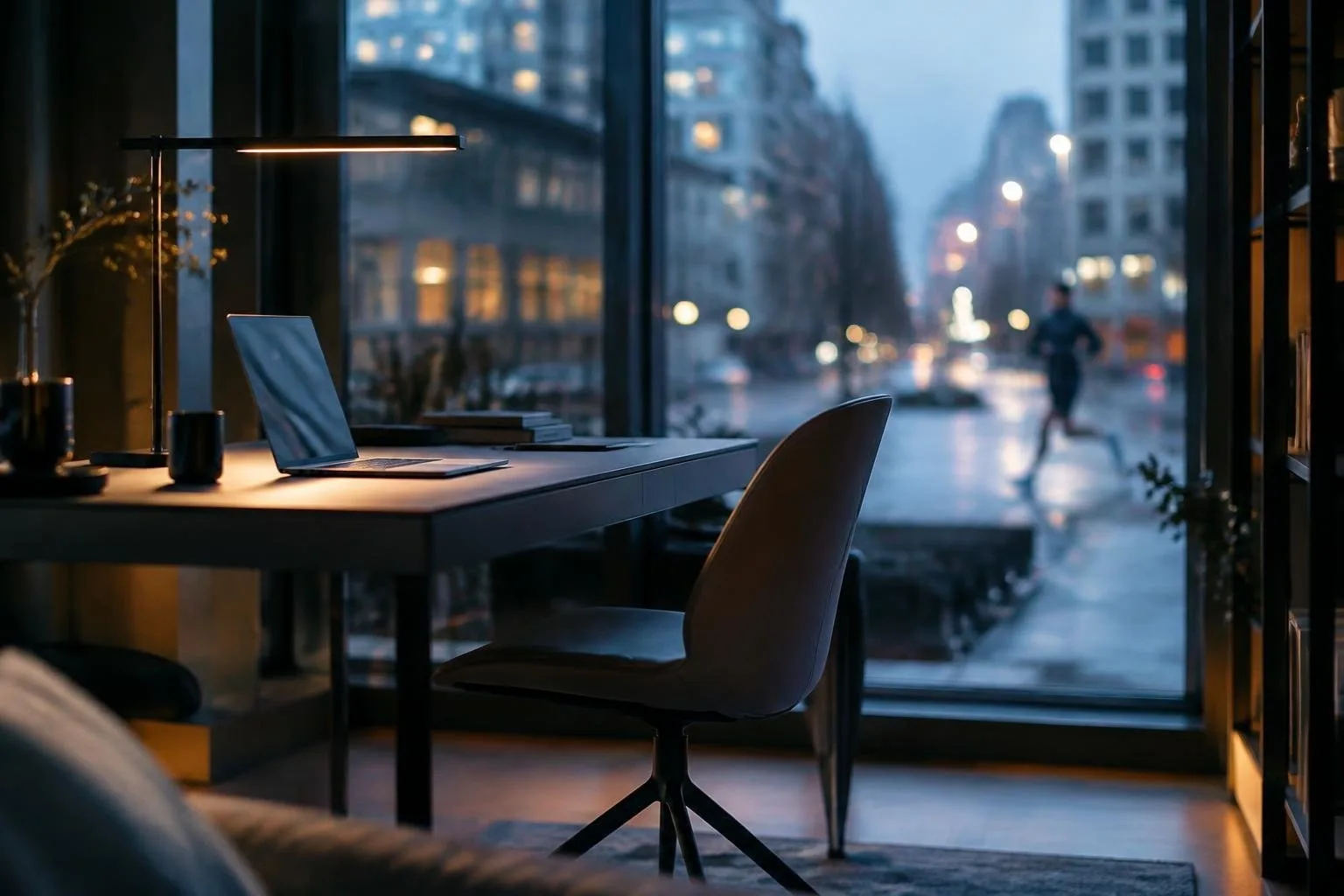
Working from home often means making do with limited square footage, but that constraint doesn’t have to compromise style or productivity. The most effective small home offices blend personal flair with ergonomic necessity, creating spaces that feel both professional and inviting. By focusing on multi-functional furniture and intentional lighting, you can transform a cramped corner into a glamorous command center.
Mastering the Dual-Purpose Desk
In tight quarters, every piece of furniture must earn its keep. Aaron Zimmerman, a writer who shares his setup insights, notes that hobbies and work often compete for desk space. His solution is a Uplift adjustable desk, which serves as a primary workstation during the day and transforms into a craft area at night. By swapping his keyboard for a cutting mat, he creates room for building models or crocheting, proving that flexibility is key to maximizing utility without expanding the footprint.
Samuel Axon faces similar spatial challenges in his 10-by-10-foot office in Chicago. To accommodate both editing work and gaming, he relies on a Secretlab Magnus Pro desk. This choice highlights how specific furniture brands cater to the hybrid needs of modern remote workers, offering durability and sleek designs that fit seamlessly into smaller apartments while supporting heavy-duty use.
Lighting as a Style Statement
Ambiance plays a crucial role in making a small space feel larger and more sophisticated. Samuel Axon uses a collection of Govee lights, including Hexa panels and RGB Edison bulbs, to define the mood of his workspace. These elements allow him to shift the atmosphere from bright and functional for daytime news hits to immersive and cozy for nighttime writing sessions. Such DIY styling tricks add visual depth and personality, turning a standard office into a curated environment.
For those seeking even more technological integration, AI-powered gadgets are reshaping how we interact with our desks. Devices like the Insta360 Link 2 Pro webcam offer automatic framing and tracking, ensuring you look polished on video calls regardless of where you sit. Similarly, the Autonomous Desk Pro uses sensors to monitor activity levels, reminding users to stand or stretch, which promotes health without cluttering the desk with extra accessories.
Smart Storage and Ergonomics
Clutter is the enemy of glamour in small spaces. Zimmerman manages this by stashing supplies in drawers and containers, keeping the surface clear when not in active use. This approach maintains a clean aesthetic while ensuring tools are readily accessible. Ergonomics also contribute to the overall feel of the office; while Axon recommends trying different chairs to find what works, the goal remains consistent: comfort that supports long hours without sacrificing style.
Investing in quality pieces like the Branch Duo Standing Desk or specialized equipment like the Warby Parker Blue Light Glasses can further enhance the workspace. These items address specific pain points, posture and eye strain, while adding a touch of premium design. Ultimately, the most successful small home offices are those that reflect the user’s identity through careful selection of furniture and lighting, proving that limited space can still yield unlimited potential.