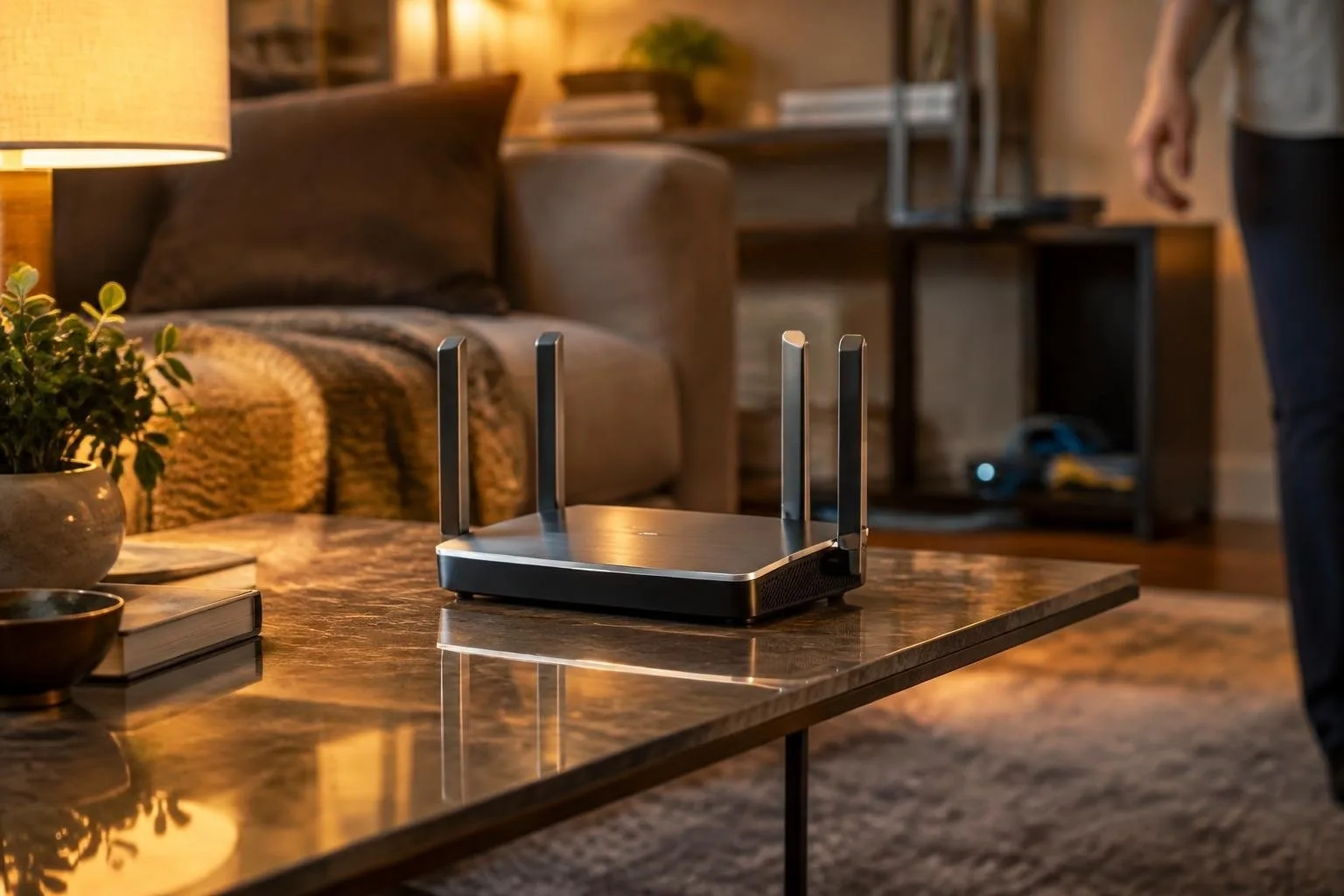
Two years after the first Wi-Fi 7 devices hit the market, the technology has moved from a niche premium offering to a realistic option for most households. The latest standard adds a wider 6 GHz band, higher throughput ceilings and dramatically lower latency, benefits that translate into smoother virtual-reality sessions, lag-free gaming and more reliable video calls. Prices, which were once prohibitive in 2023, have fallen by roughly 30-40%, making a upgrade worthwhile for anyone planning a new router purchase.
Why Wi-Fi 7 matters in 2026
The Wi-Fi 7 specification expands channel width to 320 MHz and introduces Multi-Link Operation, allowing devices to spread traffic across several bands simultaneously. In real-world tests performed in CNET Labs, the latency improvement averaged 15 ms versus the best Wi-Fi 6E units, a difference that is noticeable in fast-paced multiplayer games and immersive VR apps. Throughput gains are equally striking: top-tier models delivered up to 12 Gbps on the combined 5 GHz and 6 GHz spectra, easily handling multiple 4K streams and large-file transfers at once.
Top picks and what sets them apart
TP-Link Archer BE550 – best overall value
At a street price of $239, the Archer BE550 is the most affordable tri-band Wi-Fi 7 router that still outperforms many higher-priced competitors. In lab measurements it posted the second-best throughput scores across all bands and earned solid jitter ratings, translating to a consistently smooth experience for gaming and streaming. Setup is guided by an intuitive app, and the unit can be linked with other TP-Link models to create a mesh system if needed. The main drawbacks are occasional dead zones in very large homes and a higher packet loss rate on the 6 GHz band.
Netgear Nighthawk RS700S – fastest performer
For users who demand absolute speed, the RS700S remains the benchmark. It achieved the highest throughput on both 5 GHz and 6 GHz during testing, peaking at 12.3 Gbps, and offered two 10 Gbps Ethernet ports for wired backhaul. Jitter stayed below 1 ms on every band, providing rock-solid responsiveness. The router’s size and lack of mesh compatibility are its only real shortcomings, and it does not support Multi-Link Operation yet.
Eero 7 – best budget dual-band choice
The Eero 7 retails for under $150, making it the cheapest Wi-Fi 7 box in the review. Though it omits the 6 GHz spectrum, it still registers the fastest dual-band results among its price class and carries a sleek, minimalist design that blends into any décor. It can be expanded into a mesh network with additional Eero units, but the limited range and weaker signal make it better suited for apartments or smaller homes.
Mesh leaders – Netgear Orbi 970 and TP-Link Deco BE5000
When coverage across multiple floors is a priority, the Orbi 970 and Deco BE5000 stand out. The Orbi 970 earned CNET’s first-ever lab award for Wi-Fi 7, delivering exceptional throughput on 5 GHz and 6 GHz and nearly zero packet loss or jitter. Its dedicated 5 GHz backhaul improves inter-node communication, though the system carries a premium price tag. The Deco BE5000, meanwhile, claimed the strongest 2.4 GHz signal among mesh units and performed admirably on 5 GHz, all while keeping the overall cost relatively low. Both systems lack the ability to use Multi-Link Operation, and the Deco is limited to dual-band operation.
How the FCC’s new ban changes the buying landscape
On March 25, 2026 the Federal Communications Commission announced a ban on the sale of new routers that are classified as “foreign-made.” The rule covers virtually every consumer router presently available in the United States, except for models from Asus, Netgear and Eero, which received temporary exemptions. For all other brands, there is a risk that firmware and security updates will cease after January 1, 2029. This uncertainty suggests that shoppers should either choose one of the exempted manufacturers or wait until the FCC clarifies which additional models will earn long-term approval.
Do you really need a mesh system?
A recent two-month study by CNET Labs compared ten Wi-Fi 7 mesh kits against their standalone equivalents in a three-court-size lab. The average signal boost from adding extra nodes was a modest 3.6 dBm, indicating that a single high-quality Wi-Fi 7 router already delivers strong coverage for most dwellings. Mesh configurations did eliminate isolated dead zones in particularly tricky rooms, but the overall performance gain did not justify the added expense for the average user. In short, unless your home has unusually thick walls or multiple stories, a well-chosen standalone unit—such as the Archer BE550 or RS700S—should meet everyday needs.
2026 marks the year when Wi-Fi 7 becomes both affordable and practical. Choose the Archer BE550 for balanced value, the RS700S for raw speed, the Eero 7 for budget-conscious apartments, or a mesh solution like the Orbi 970 if you need whole-home coverage. Keep the FCC ban in mind when selecting a brand, and you’ll future-proof your home network without overspending.