
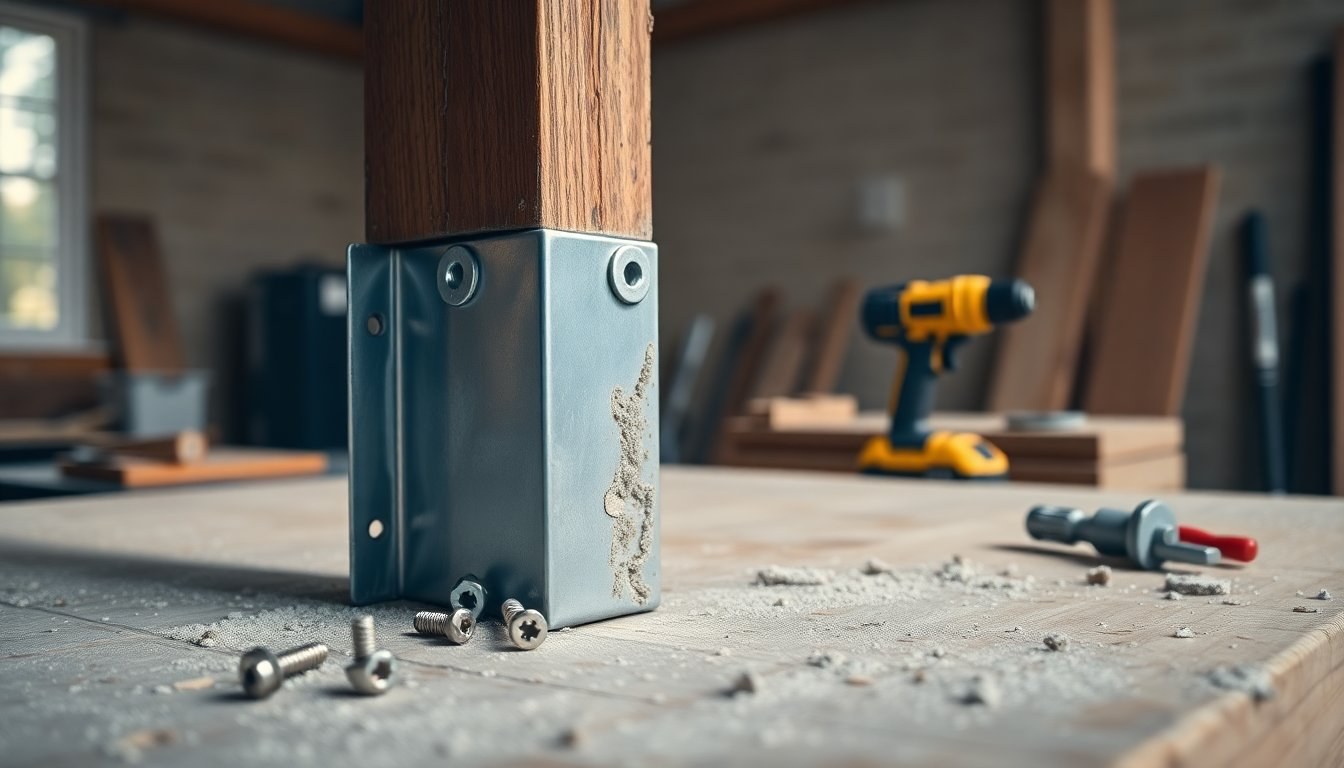
The galvanized steel angle bracket is a straightforward component that changes how you approach perpendicular connections in construction and repair work. Designed with a 90° bent profile, this bracket helps align and secure two surfaces at right angles, whether you are working with timber, metal or masonry. Its durable build and protective finish make it a practical choice for both household projects and professional installations, offering predictable performance when you need rigid joints and tidy results.
Beyond its shape, the bracket focuses on usability: it includes several fixing holes to accept screws, bolts or anchors appropriate to the support material. Edges are rounded and surfaces finished to reduce the risk of injury during handling and to improve the fit against uneven surfaces. If you want a small, reliable solution for joining posts, frames or panels, the bracket provides a simple mechanical answer that avoids complex joinery or bespoke metalwork.
Design and construction
At the heart of this product is a single-plate construction made from 3 mm steel sheet that provides solid mechanical strength without excessive bulk. The plate is folded to form the 90° angle, creating two flanges that sit flush on the joined members and distribute load across a wider area than a single fastener. The multiple pre-drilled holes are arranged to give flexibility in positioning and to accommodate different fastener sizes, making alignment easier during assembly. Manufactured for repeatable, consistent use, the bracket is suitable where straightforward reinforcement or right-angle support is required.
Material and thickness
The base material is a medium-gauge steel sheet with a thickness of 3 mm, chosen to balance rigidity and workability. This thickness ensures the bracket resists bending under common service loads while remaining compatible with standard screw and bolt sizes. Using a uniform sheet thickness also simplifies manufacturing and yields consistent hole spacing and edge quality. When selecting fasteners, pair the bracket with hardware that matches the expected load and the material substrate: wood screws for timber, machine bolts for metal, and anchors or plugs for masonry.
Coating and finish
To protect the steel from environmental deterioration, the brackets receive a galvanic zinc coating, a metallic finish that provides corrosion resistance in indoor and sheltered conditions. This coating slows oxidation and helps maintain the bracket’s look and strength over time. In addition to the protective layer, the manufacturing process includes deburred edges and rounded corners to minimize the risk of cuts and to allow a closer fit against workpieces. While the finish is well suited for protected environments, exposure to harsh outdoor conditions may require additional protective measures or a different grade of stainless material.
Installation and typical applications
Installation is straightforward: position the bracket so each flange rests against the surfaces you wish to join, mark hole positions, and fasten with screws, bolts or plugs as appropriate. The multiple fixing holes allow for staggered fasteners that improve load distribution and reduce the tendency for the bracket or substrate to twist. Common uses include securing beams to posts, reinforcing frame corners, fixing panels to supports, and mounting small shelves or supports. Its compatibility with wood, metal and masonry makes it a versatile tool in carpentry, general DIY and light structural repair.
Fastening options and safety
Select fasteners that match the substrate: sturdy wood screws for timber, appropriate-size bolts or self-tapping screws for metal, and wall plugs or anchors for masonry applications. Using the right fasteners not only enhances the joint’s strength but also prevents material damage and loosening over time. The bracket’s rounded edges and finished holes reduce snagging and improve safety during fitting. For critical load-bearing situations or where building regulations apply, consult structural guidelines or a professional to confirm the bracket and chosen fixings meet required safety margins.
What’s in the pack and suitability
Each pack contains two angle brackets arranged as a matched pair: a right and a left unit to suit mirrored or symmetric assemblies. The set is ideal for reinforcing perpendicular elements such as posts, beams, frames and panels in domestic, workshop or light-commercial environments. As a compact, economical hardware item, the bracket streamlines many common joining tasks and is a handy inclusion for anyone doing routine carpentry, assembly or maintenance work. Remember that while the bracket offers reliable performance in protected conditions, long-term exposure to aggressive environments may call for specialized materials or coatings.


